






What's Happening?
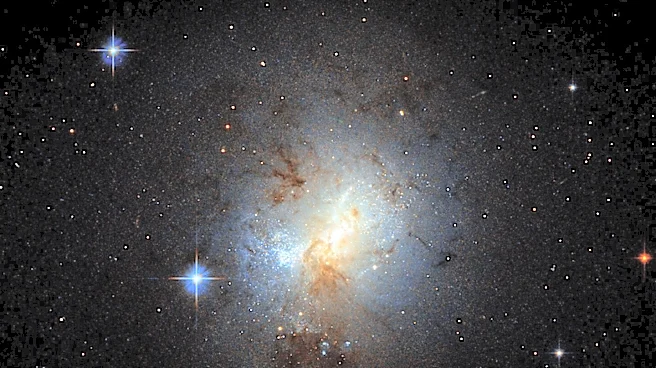
Astronomers have compiled a new photo gallery featuring 16 'cosmic gems,' which are distant galaxies exhibiting a wide range of sizes, shapes, and high-energy characteristics. This collection, spearheaded by data from NASA’s Chandra Observatory, combines
X-ray telescope data collected over decades with observations from other space telescopes like Webb and Hubble, as well as ground-based arrays such as IXPE, Neil Gehrels Swift Observatory, and NuSTAR. The galaxies are categorized into spirals, ellipticals, and irregulars, each offering unique insights into galactic phenomena. According to Megan Watzke of the Chandra X-ray Center, studying these diverse galaxies helps in understanding the Milky Way's own history and place in the universe.
Why It's Important?
This new gallery is important for advancing the understanding of galaxy evolution and the universe's structure. By showcasing the variety of galactic forms and their high-energy features, scientists can gain deeper insights into the physical processes that shape these cosmic entities. The integration of data from multiple advanced telescopes provides a comprehensive view, allowing for more detailed analysis than single-source observations. This research contributes to fundamental astronomy, helping to refine models of galaxy formation and interaction, and ultimately, our comprehension of the cosmos. The study of these 'cosmic gems' also serves as a comparative tool, enabling astronomers to better understand the past and future of our own galaxy.
What's Next?
The ongoing analysis of data from the Chandra Observatory and other telescopes will likely lead to further discoveries and a more refined classification of galaxies. Future research may focus on the specific high-energy processes observed in these 'cosmic gems,' potentially revealing new types of galactic activity or confirming existing theories. Continued observations with advanced instruments will provide even more detailed data, allowing astronomers to track changes in these galaxies over time and better understand their evolutionary paths. This continuous data collection and analysis will contribute to a more complete picture of the universe's dynamic nature.
Beyond the Headlines
The creation of this gallery highlights the collaborative nature of modern astronomy, where data from various sophisticated instruments are combined to form a more complete picture of celestial objects. It also underscores the long-term value of missions like the Chandra Observatory, which has been collecting X-ray data for decades, providing a rich historical dataset for current and future research. The aesthetic appeal of these 'cosmic gems' also serves to engage the public with scientific discovery, fostering interest in space exploration and astronomy. This initiative not only advances scientific knowledge but also inspires a broader appreciation for the beauty and complexity of the universe.