







What's Happening?
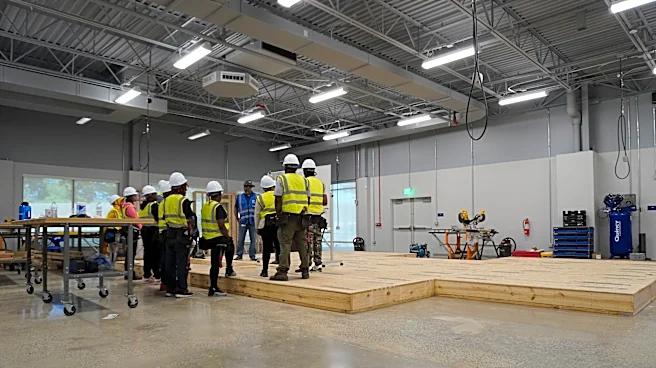
Governor Josh Stein announced that more than 500 high school students in North Carolina successfully completed summer pre-apprenticeship and youth apprenticeship academies this year. These programs, facilitated by the North Carolina Business Committee
for Education (NCBCE), focused on high-demand sectors such as electrical trades, advanced manufacturing, agriculture, biotechnology, and healthcare. The academies are part of the NC Career Launch initiative, which has supported 1,067 students in youth apprenticeships across 48 counties since 2024, partnering with over 165 employers. Governor Stein highlighted that these apprenticeships provide students with hands-on learning experiences and the opportunity to earn a paycheck while exploring career pathways. The Careers Electric Summer Academies, a new NCBCE initiative, received a $1 million grant from the BlackRock Foundation to expand into eastern North Carolina, addressing critical electrical workforce demands. Additionally, programs like Southeastern Education and Economic Development (SEED) and BioWork Pre-Apprenticeship for students on the autism spectrum have also seen successful completions, further diversifying the opportunities available to North Carolina's youth.
Why It's Important?
This initiative is crucial for North Carolina's economic development and workforce pipeline. By providing high school students with early exposure and training in high-demand industries, the state is proactively addressing skill gaps and ensuring a steady supply of qualified workers. The focus on sectors like advanced manufacturing, healthcare, and electrical trades aligns with current and future industry needs, which are vital for sustaining economic growth. The involvement of the North Carolina Business Committee for Education (NCBCE) and partnerships with over 165 employers underscore a collaborative approach between education and industry, ensuring that the training provided is relevant and leads to tangible career opportunities. Furthermore, the BlackRock Foundation's $1 million grant for the Careers Electric Summer Academies highlights the national recognition of North Carolina's efforts and will significantly boost the state's capacity to train its future electrical workforce, particularly in underserved regions. This investment in youth apprenticeships also helps reduce the financial burden on students by allowing them to earn while they learn, making higher education and skilled trades more accessible.
What's Next?
The North Carolina Business Committee for Education (NCBCE) and its partners plan to expand the number of academy sites in 2027, indicating a continued commitment to growing these youth apprenticeship programs. The $1 million grant from the BlackRock Foundation will specifically enable the expansion of the Careers Electric Summer Academy model into eastern North Carolina, where electrical workforce demands are particularly acute. This expansion will likely lead to more students gaining valuable skills and credentials, further strengthening the state's workforce. Governor Stein's previous directive to allocate discretionary Workforce Innovation and Opportunity Act (WIOA) funding towards NC Career Launch, and the Governor's Council on Workforce and Apprenticeships' goal of doubling apprenticeships statewide, suggest a sustained focus on these initiatives. The recent state budget also includes significant investments in workforce development and the community college system, including $57.7 million for Propel NC and $3.1 million for ApprenticeshipNC, which will further support the growth and effectiveness of these programs.
Beyond the Headlines
The success of these apprenticeship academies points to a broader shift in educational and workforce development strategies, emphasizing practical, career-connected learning over traditional academic-only pathways. This model not only equips students with specific job skills but also fosters a deeper understanding of industry demands and professional expectations, potentially leading to higher job retention and satisfaction. The inclusion of programs for students on the autism spectrum, such as the BioWork pre-apprenticeship, highlights an important ethical dimension: ensuring equitable access to career opportunities for diverse populations. By breaking down barriers to entry for individuals with unique needs, North Carolina is promoting a more inclusive workforce. This approach could serve as a national model for how states can leverage public-private partnerships and targeted funding to create robust talent pipelines, address critical workforce shortages, and empower young people to enter high-demand fields directly out of high school, thereby strengthening local economies and communities.