
What's Happening?
The FBI and Justice Department have announced the seizure of cyber tools, specifically 'Microscan' and 'FishHub,' used by a hacking group known as Flax Typhoon, which officials associate with the Chinese
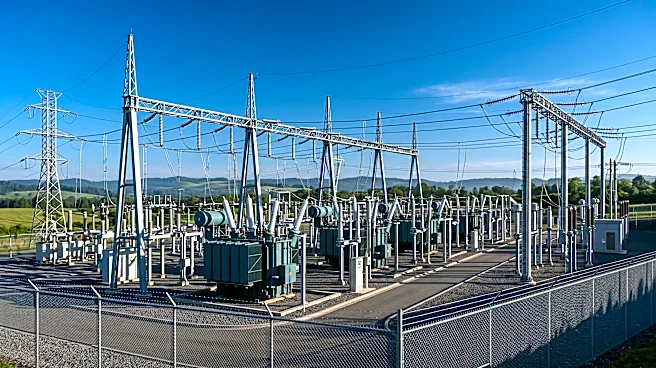
government. These tools were employed to scan, phish, and hack various targets, including critical infrastructure in the U.S. and abroad. Among the identified targets were an unnamed U.S. power company, Japanese and Polish airports, Taiwanese universities, a multinational non-governmental organization, and Taiwanese critical infrastructure companies. This action represents the latest in a series of law enforcement efforts to counter the widespread hacking campaign. The FBI Cyber Division Deputy Assistant Director Jason Bilnoski described the hacking operation as 'indiscriminate and reckless.' The tools were operated by Integrity Technology Group, a Chinese-based information security company that the FBI identifies as closely associated with the Chinese government and the true identity of Flax Typhoon.
Why It's Important?
This seizure is a significant development in the ongoing cyber warfare landscape, directly impacting U.S. national security and economic stability. The targeting of critical infrastructure, such as power companies and airports, poses a direct threat to public safety and essential services. By rendering these tools inoperable, the FBI has temporarily disrupted a sophisticated state-sponsored hacking operation, potentially preventing future attacks that could cause widespread disruption and economic damage. The involvement of a Chinese-based company, Integrity Technology Group, further highlights the complex nature of cyber threats, often blurring the lines between state-sponsored activities and private entities. This action underscores the U.S. government's commitment to actively counter cyber espionage and protect its vital assets from foreign adversaries, setting a precedent for future responses to similar threats.
What's Next?
FBI San Diego Supervisory Special Agent Brett Lally indicated that the department will continue to monitor for any attempts by the Integrity Technology Group to rebuild its cyber infrastructure. This suggests an ongoing vigilance and a proactive stance against potential resurgence of the hacking operation. The U.S. government is likely to continue its efforts to identify and disrupt similar cyber threats, potentially leading to further seizures, indictments, or diplomatic actions against entities involved in state-sponsored hacking. This incident may also prompt U.S. critical infrastructure operators to enhance their cybersecurity defenses and collaborate more closely with federal agencies to mitigate future risks. The international community may also see increased discussions and collaborations on cybersecurity measures to counter such transnational threats.
Beyond the Headlines
The seizure of these cyber tools highlights the evolving nature of international conflict, where digital battlegrounds are becoming as crucial as traditional ones. This incident raises deeper questions about the role of private companies in state-sponsored cyber operations and the challenges of attribution in the digital realm. The 'indiscriminate and reckless' nature of the attacks, as described by the FBI, suggests a broader strategy that goes beyond traditional intelligence gathering, potentially aiming for disruption and destabilization. This development could lead to a re-evaluation of international cyber norms and the development of new legal frameworks to address state-sponsored cyber warfare. It also underscores the constant need for innovation in cybersecurity to stay ahead of increasingly sophisticated threats, impacting both government and private sector security strategies.