
What's Happening?
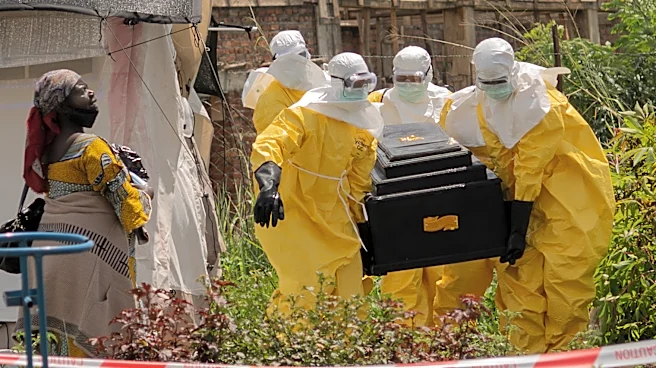
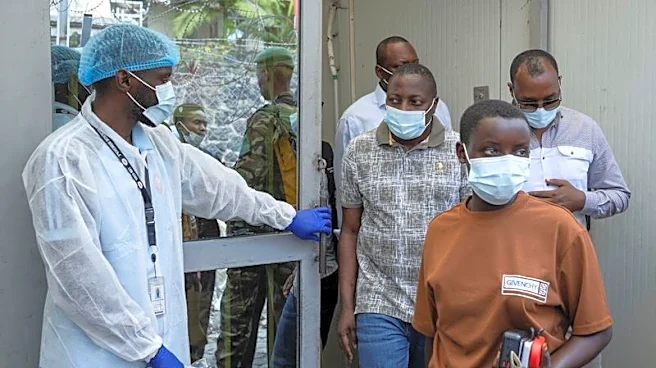
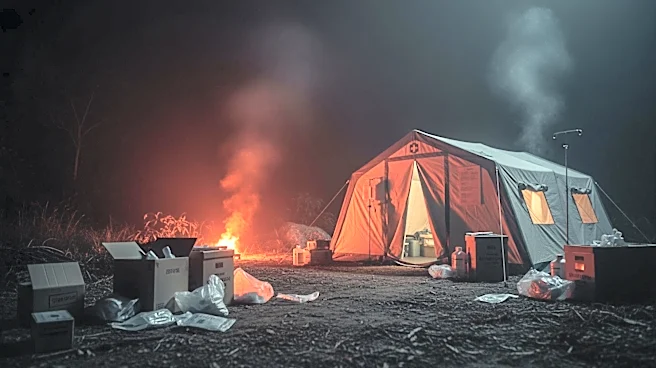
An Ebola treatment center in the Democratic Republic of Congo was set on fire by locals attempting to retrieve the body of a deceased Ebola victim. The center, which was not operational at the time, was used
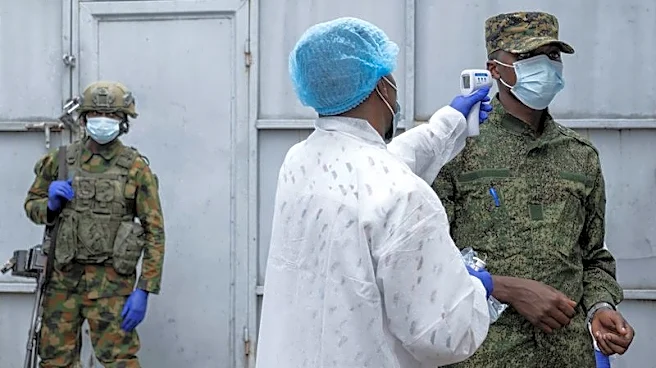
for storing bodies before burial, a critical step in controlling Ebola outbreaks. The incident reflects growing tensions and challenges faced by health workers in managing the outbreak, as stringent health measures often clash with local customs. The region, already struggling with inadequate health facilities and ongoing armed conflicts, has seen the Ebola virus spread rapidly, complicating containment efforts.
Why It's Important?
The arson attack on the Ebola treatment center underscores the difficulties in balancing public health measures with cultural practices. The spread of Ebola poses a significant threat to public health, not only in Congo but potentially to neighboring regions. The incident highlights the need for effective communication and community engagement to ensure compliance with health protocols. Failure to manage the outbreak could lead to further spread of the virus, overwhelming local health systems and potentially leading to a broader international health crisis. The situation calls for increased support from international health organizations to provide resources and expertise.
What's Next?
In response to the attack, authorities may need to enhance security measures at treatment centers and increase efforts to educate the public about the importance of following health protocols. International aid organizations might step up their support, providing additional resources and personnel to assist in containment efforts. The World Health Organization and other global health bodies could play a crucial role in coordinating a response and ensuring that the outbreak does not escalate further. The situation may also prompt discussions on how to better integrate cultural considerations into public health strategies to prevent similar incidents in the future.