






What's Happening?
The Pennsylvania Emergency Management Agency (PEMA) has announced the application period for the 2026 Federal Emergency Management Agency (FEMA) Flood Mitigation Assistance (FMA) Grant Program. A total of $400 million has been allocated for this funding
cycle, with specific amounts designated for different project types: $20 million for capability and capacity building activities, $260 million for localized flood risk reduction projects, and $120 million for individual flood mitigation projects. Municipalities that are in good standing with the National Flood Insurance Program are eligible to apply. Previous FMA applicants must submit a new Letter of Interest (LOI) for this round. The LOI must be sent to PEMA by 4 PM EST on Friday, December 4, 2026. Following PEMA approval, interested applicants will then need to submit a new 2026 FMA application in FEMAGO by 4 PM EST on Friday, January 15, 2027. PEMA has provided a new FMA Guidance document and refers applicants to the current Notice of Funding Opportunity (NOFO) for FY 26 Flood Mitigation Assistance for program priorities and changes.
Why It's Important?
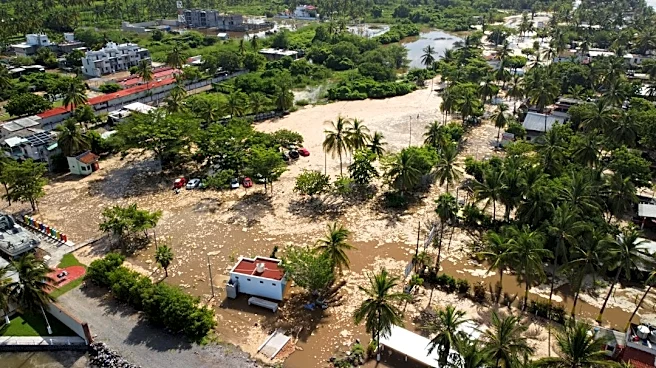
This announcement is crucial for Pennsylvania communities, particularly those vulnerable to flooding, as it provides a significant opportunity to secure federal funding for critical flood mitigation efforts. With $400 million available, these grants can finance projects that protect infrastructure, reduce property damage, and enhance community resilience against future flood events. The allocation of funds across different project types—from capacity building to localized and individual mitigation—ensures a comprehensive approach to flood risk reduction. For municipalities, securing these funds can alleviate the financial burden of implementing costly mitigation measures, which are essential for public safety and economic stability. The requirement for municipalities to be in good standing with the National Flood Insurance Program also incentivizes participation in federal flood management initiatives, promoting broader adherence to flood-safe practices. Ultimately, these grants are vital for minimizing the long-term impacts of flooding, which can include displacement, economic disruption, and loss of life.
What's Next?
Eligible Pennsylvania municipalities must act swiftly to meet the application deadlines. The first step is to submit a non-contractual and required Letter of Interest (LOI) to PEMA by December 4, 2026. This LOI is a prerequisite for submitting a full application. After PEMA approves the LOI, applicants can proceed with submitting their complete 2026 FMA application in FEMAGO by January 15, 2027. Any incomplete applications after this date will not be considered for the current cycle and will have to wait for the next FEMA FMA application period. PEMA encourages applicants to review the new FMA Guidance document and the current Notice of Funding Opportunity (NOFO) to understand program priorities and changes. Questions regarding the application process can be directed to the State Hazard Mitigation Office. Successful applicants will then be able to initiate their flood mitigation projects, contributing to enhanced safety and resilience across the state.
Beyond the Headlines
The availability of federal flood mitigation funds through FEMA's FMA program underscores a national commitment to proactive disaster risk reduction, moving beyond reactive response efforts. This program reflects a growing understanding that investing in mitigation before a disaster strikes is more cost-effective and saves more lives than post-disaster recovery. The structured application process, including the LOI and detailed guidance, aims to ensure that funds are allocated to well-planned and impactful projects. However, the complexity of federal grant applications can be a barrier for smaller municipalities with limited resources, highlighting a potential need for state-level support in navigating these processes. The emphasis on localized and individual mitigation projects also points to a recognition of the diverse nature of flood risks, requiring tailored solutions rather than a one-size-fits-all approach. This ongoing effort to build resilience is critical in the face of changing climate patterns and increasing frequency of extreme weather events, making such funding opportunities increasingly vital for the long-term sustainability of communities.