



What's Happening?
The Federal Emergency Management Agency (FEMA) has allocated more than $4.5 million in grants to fire departments and emergency medical service organizations across Rhode Island. This funding, provided through FEMA’s Assistance to Firefighters Grant program,
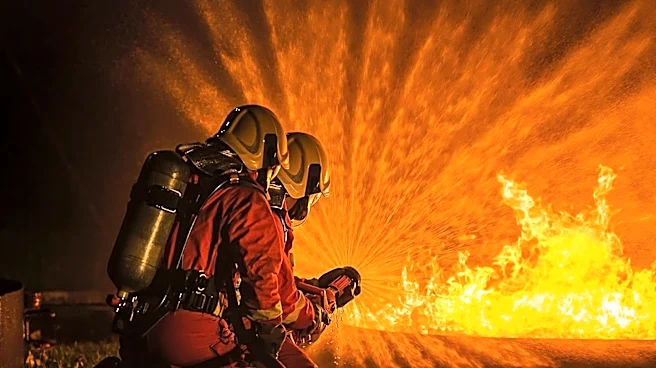
is designated for new equipment, training, and emergency response upgrades. Providence received the largest award, $1.85 million, for firefighter breathing apparatus and training, with nearly $1.5 million specifically for new self-contained breathing apparatus (Air-Paks) and the remainder for supervisory training for officers. Other significant awards include $1 million for Woonsocket for an aerial ladder truck, nearly $500,000 for Coventry for an ambulance, and $339,932 for West Warwick for equipment and cardiac monitors. The Prudence Island Volunteer Fire Department will receive $255,015 for new radios, Lincoln’s two fire departments will get $157,031 for cardiac monitors, radios, and a thermal imaging camera, and Newport will receive $68,181 for CPR devices. The Rhode Island Fire Training Academy was awarded $370,086 for training equipment. These grants were announced in separate releases by FEMA on September 25 and October 2, with Rhode Island’s congressional delegation combining them into a single announcement on September 30.
Why It's Important?
This significant federal investment directly enhances the safety and operational capabilities of first responders in Rhode Island. By providing funds for essential equipment like breathing apparatus, aerial ladder trucks, ambulances, cardiac monitors, and radios, the grants ensure that fire departments and EMS can respond more effectively to emergencies, ultimately protecting lives and property. The allocation for training equipment and supervisory training also addresses the critical need for ongoing professional development, ensuring that personnel are well-prepared for complex and dangerous situations. This funding is particularly crucial for smaller volunteer departments, which often rely heavily on grants for major equipment purchases. The initiative underscores a federal commitment to supporting local emergency services, which are the frontline defense in disaster response and daily emergencies. The grants also highlight the ongoing efforts by Rhode Island's congressional delegation to secure federal resources for the state, especially in areas of public safety and disaster preparedness, following previous disagreements with FEMA over disaster aid.
What's Next?
Providence has two years to utilize its $1.85 million grant, with plans to purchase new Air-Paks within months and deploy them by early 2027. The remaining funds will support nationally standardized supervisory training for Providence Fire Department officers. Other recipient departments will proceed with their respective equipment purchases and training initiatives as outlined in their grant applications. The broader context includes ongoing legislative efforts, such as the Disaster Relief Fairness Act introduced by U.S. Sen. Jack Reed and U.S. Sen. Sheldon Whitehouse, and similar legislation in the House by U.S. Reps. Gabe Amo and Seth Magaziner. This legislation aims to mandate federal disaster aid approval when a state meets FEMA’s criteria, potentially streamlining future funding processes for Rhode Island and other states. The state will continue to engage with FEMA on funding for disaster risk reduction projects, building on the more than $3.3 million already announced for seawall repairs and flood mitigation.
Beyond the Headlines
The allocation of these FEMA grants extends beyond immediate equipment upgrades, touching upon critical aspects of community resilience and inter-governmental relations. The emphasis on modern equipment and advanced training reflects an evolving understanding of emergency response, where technological advancements and skilled personnel are paramount. The legislative push for the Disaster Relief Fairness Act highlights a recurring tension between state and federal authorities regarding disaster aid, particularly after FEMA's rejection of Rhode Island's request for assistance following a past blizzard. This ongoing dialogue underscores the need for clearer, more consistent guidelines for federal disaster relief, which could have long-term implications for how states prepare for and recover from natural disasters. Furthermore, the grants contribute to the overall public trust in emergency services, reassuring communities that their first responders are well-equipped and highly trained, fostering a sense of security and preparedness against unforeseen events.