
What's Happening?
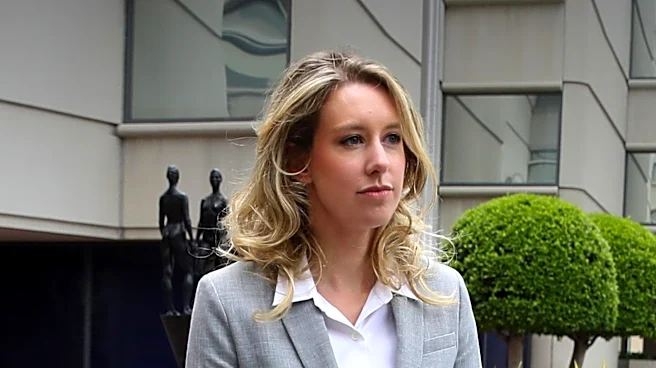
A new documentary titled 'You Can See Everything,' co-directed by Nathan Fielder and Lance Oppenheim, scrutinizes Elizabeth Holmes, the founder of Theranos, focusing on her current self-presentation rather
than a rehash of her rise and fall. The film began shooting in 2023, 34 days before Holmes was scheduled to begin an 11-year prison sentence for fraud. It explores Holmes's account of herself, the stories she tells, and how the filmmakers are implicated in their telling. The documentary features Holmes and her partner, Billy Evans, at their San Diego home with their two young children. Fielder employs various methods, including direct questioning, setting up unusual situations, and analyzing Holmes's language and image, to explore themes of objectivity, authenticity, and performance. The film also delves into Holmes's reaction to dramatizations of her story, such as 'The Dropout,' and her claim that she never told a lie.
Why It's Important?
This documentary is significant for its unconventional approach to a high-profile figure like Elizabeth Holmes, moving beyond a simple recounting of her legal troubles. By focusing on her current narrative and the process of filmmaking itself, it raises important questions about media representation, the construction of public image, and the nature of truth in a post-truth era. The film's exploration of Holmes's insistence that she never lied, despite her conviction for fraud, challenges viewers to critically assess how individuals perceive and present their own realities. The involvement of Nathan Fielder, known for pushing the boundaries of documentary and reality TV, suggests a deeper commentary on the manipulation of perception and the complexities of human behavior, particularly in the context of public scrutiny and legal consequences. This approach can influence how the American public views figures involved in corporate scandals, encouraging a more nuanced understanding of their personal narratives.
What's Next?
The documentary 'You Can See Everything' has already screened at the Telluride Film Festival and achieved significant box office success, indicating a strong public interest in Elizabeth Holmes's story and Fielder's unique directorial style. The film's structure, which shifts significantly midway through its 174-minute runtime as Holmes begins her prison sentence, suggests a continued exploration of her narrative under new circumstances. This shift will likely intensify the film's examination of performance and reality, as Fielder and the audience grapple with Holmes's story while she is incarcerated. The film's critical reception and commercial success could influence future documentary filmmaking, particularly in how it approaches controversial subjects and the ethical considerations of documenting individuals facing legal repercussions. It may also spark further public discussion about the Theranos scandal and the broader implications for corporate accountability and media ethics.
Beyond the Headlines
The documentary's exploration of Holmes's creation of an AI version of herself, using 200 cameras, delves into profound questions about identity, technology, and the future of self-representation. This element highlights the blurring lines between human and artificial intelligence, and how individuals might attempt to control their narratives even in the digital realm. The film's title, 'You Can See Everything,' ironically questions the very possibility of complete transparency, suggesting that even with extensive access, the full truth remains elusive. This raises ethical and philosophical considerations about the nature of documentary filmmaking, the power dynamics between filmmaker and subject, and the audience's role in interpreting mediated realities. The film's layered approach encourages a critical examination of how public figures, especially those embroiled in controversy, attempt to shape their legacies and how media can either reinforce or deconstruct those efforts.