
What's Happening?
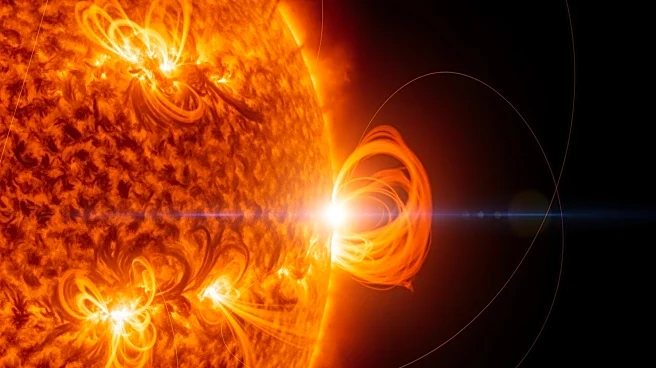
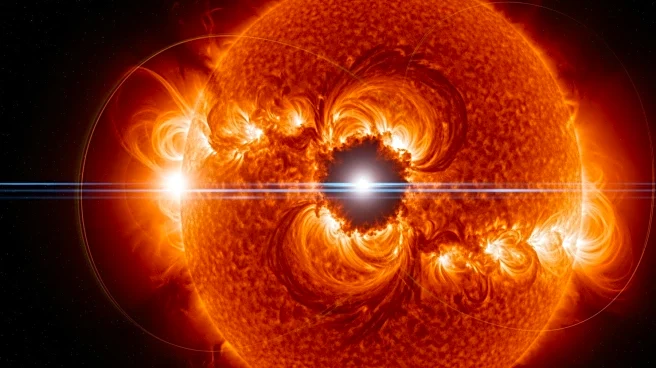
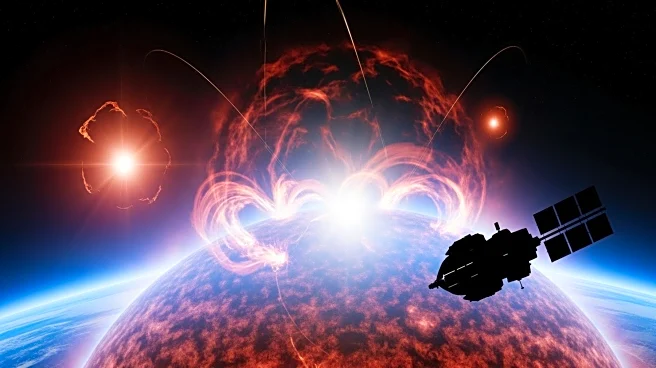
Recent observations from the Solar Orbiter and NASA's Solar Dynamics Observatory have captured one of the most intense solar regions in two decades, known as NOAA 13664. This region, observed between April
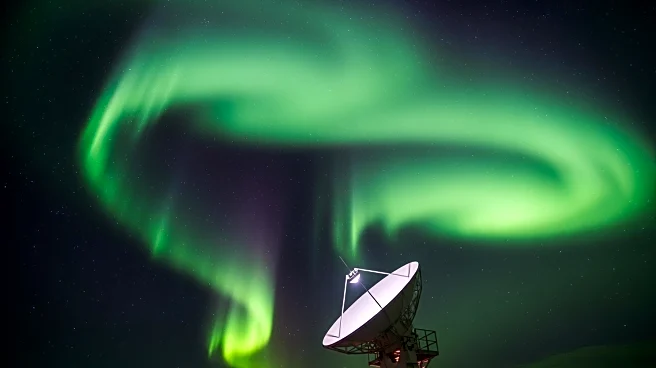
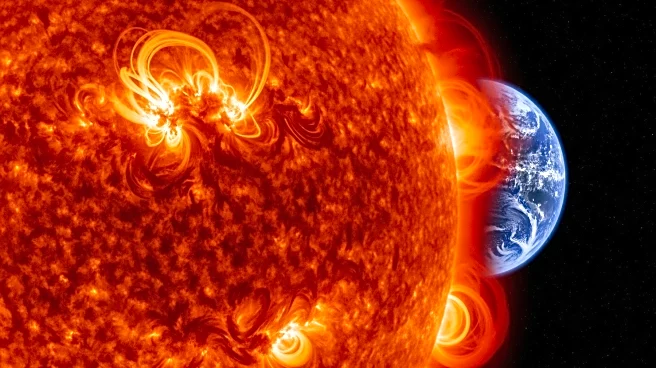
and July 2024, triggered the strongest geomagnetic storms since 2003, causing auroras visible as far south as Switzerland. The research team, led by Louise Harra and Ioannis Kontogiannis, combined data from two spacecraft to track the solar region's evolution over 94 days, marking the longest continuous observation of a single active solar region. The study highlights the complex magnetic fields driving solar storms, which can disrupt power grids and communication systems on Earth.
Why It's Important?
The findings underscore the significant impact of solar storms on modern technology and infrastructure. Severe space weather can disrupt power grids, interfere with communication systems, and increase radiation exposure for aircraft crews. The study's insights into solar activity are crucial for improving space weather forecasts, which can help protect satellites and power systems. The research also highlights the vulnerability of digital agriculture, as disruptions in satellite signals can lead to crop failures and economic losses. Understanding solar activity is vital for mitigating these risks and ensuring the resilience of technological systems.
What's Next?
The research team aims to improve predictions of solar storms and their effects on Earth. While current models can identify regions with complex magnetic fields, predicting the exact timing and strength of solar eruptions remains challenging. The European Space Agency is developing a new space probe, Vigil, dedicated to enhancing space weather understanding, with a planned launch in 2031. This mission will focus on improving forecasts and protecting sensitive technologies from solar storm impacts.