
What's Happening?
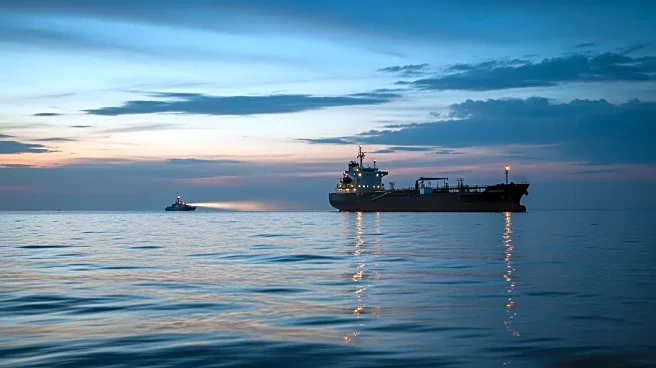
The United States is reportedly pursuing a third oil tanker near Venezuela in international waters, according to a report by Reuters. This action follows a series of similar incidents where U.S. forces
have intercepted vessels linked to Venezuela. The Pentagon has directed inquiries to the White House, which has yet to comment on the situation. This pursuit is part of a broader U.S. military buildup in the Caribbean and South American waters, which includes the deployment of an aircraft carrier, fighter jets, and tens of thousands of troops. The U.S. government, under President Trump, has framed these actions as part of an expanded counter-narcotics and sanctions enforcement strategy. The tanker in question is reportedly under sanctions, and the U.S. Coast Guard has already apprehended another vessel that was last docked in Venezuela.
Why It's Important?
This development is significant as it underscores the ongoing tensions between the United States and Venezuela, particularly concerning oil exports and alleged drug trafficking. The U.S. has accused Venezuela of using oil revenues to fund illicit activities, prompting a blockade on Venezuelan oil tankers. These actions could further strain diplomatic relations and impact global oil markets, as Venezuela is a major oil producer. The U.S. military's increased presence in the region also highlights the strategic importance of the Caribbean and South American waters in U.S. foreign policy. The situation could lead to heightened geopolitical tensions, affecting international trade and regional stability.
What's Next?
The pursuit of the third tanker suggests that the U.S. will continue its aggressive stance on enforcing sanctions against Venezuela. This could lead to further confrontations at sea and potential diplomatic fallout. Venezuela has condemned these actions as acts of international piracy and theft, indicating that the Venezuelan government may seek international support or legal recourse. The U.S. may face criticism from other nations and international bodies concerned about the legality and implications of such maritime interventions. The situation remains fluid, and further developments are expected as both countries navigate this complex geopolitical landscape.