





What's Happening?
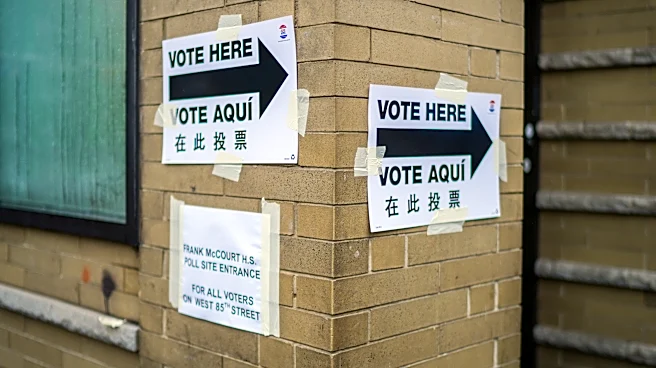
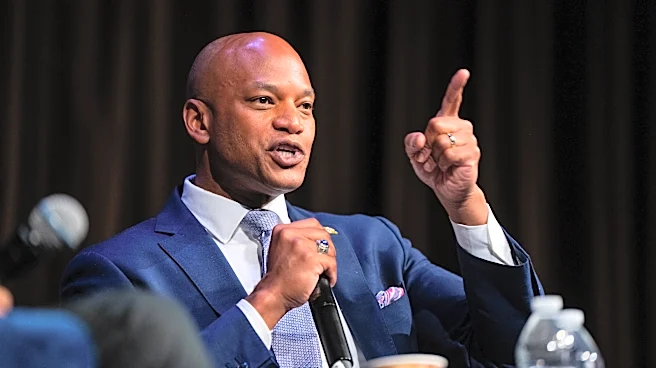
Maryland's primary elections have concluded, setting the stage for the November general elections. Democratic Governor Wes Moore will face former Maryland state delegate Dan Cox in the gubernatorial race. Moore secured 87.8% of the votes against Eric
Felber, while Cox won 45.2% against Ed Hale. The primary also included elections for all eight of Maryland's House seats. Notable results include incumbent Rep. Andy Harris winning the Republican primary in District 1 with 81.4% of the votes, and incumbent Rep. John Olszewski securing the Democratic primary in District 2 with 83.7%. The elections are part of a broader effort by Republicans and President Trump to gain a majority in Congress.
Why It's Important?
The outcomes of these primaries are significant as they set the political landscape for the upcoming general elections. Governor Wes Moore's strong performance in the Democratic primary suggests a solid base of support, which will be crucial in the general election against Dan Cox. The results in the House races indicate the potential for shifts in party control, particularly as Republicans aim to secure a majority in Congress. These elections are a critical component of the national political strategy, influencing legislative priorities and the balance of power in Washington, D.C.
What's Next?
As the general election approaches, both parties will intensify their campaigns to secure victories in November. Governor Moore and Dan Cox will likely focus on key issues such as the economy, healthcare, and education to appeal to voters. In the House races, candidates will continue to engage with constituents to solidify their positions. The outcomes of these elections will have significant implications for state and national policies, potentially affecting legislative agendas and governance strategies.