



What's Happening?
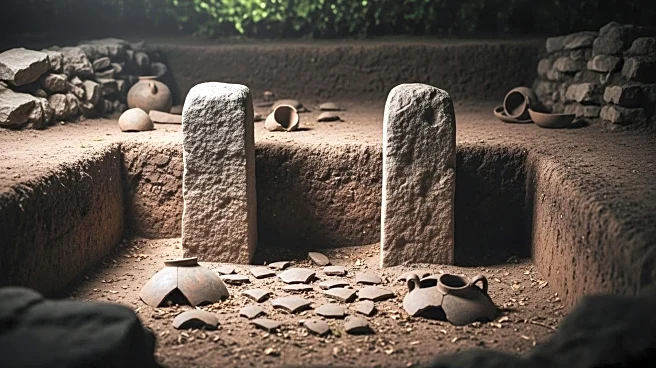
Researchers in France have discovered five ancient skeletons buried in a seated position at the Joséphine Baker school in Dijon. The skeletons, believed to date back to the second Iron Age, were found during an excavation by the French National Institute
for Preventive Archaeological Research. The bodies were laid to rest identically, seated with their backs against the eastern wall and facing west. A black stone armband found with the remains helped date the skeletons to the Gallic period. This discovery is part of a larger necropolis that includes remains from the Gallo-Roman period and extends into the modern era. The seated burial position is rare, with few examples found from the Mesolithic period onwards.
Why It's Important?
This discovery provides valuable insights into ancient Gallic burial practices and the cultural significance of seated burials. The findings contribute to the understanding of the social and ritualistic aspects of the Gallic tribes, a Celtic group that inhabited present-day France. The seated position of the skeletons, along with the absence of personal belongings, raises questions about the cultural or religious beliefs that may have influenced such burial practices. For archaeologists and historians, these findings offer a rare glimpse into the funerary customs of ancient European societies, potentially leading to new interpretations of their social structures and interactions with other cultures during the Iron Age.