

What's Happening?
Colorado is currently experiencing significant drought conditions, with nearly 90% of the state under drought or abnormal dryness as of early September. Denver Water, a major utility, reported its lowest April-through-July streamflow in 110 years, reaching
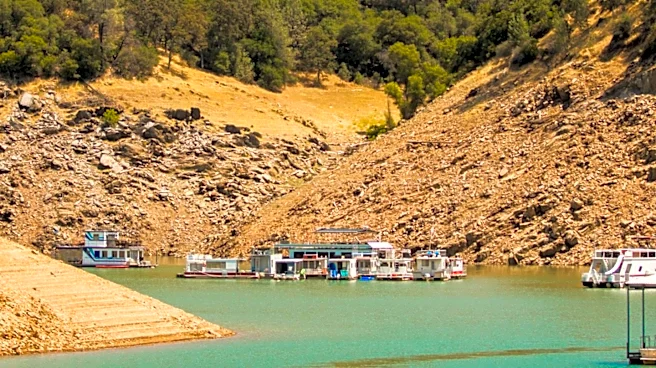
only 22% of normal levels. Reservoir storage is also considerably below average, standing at 71% full at the end of August, compared to a historical average of 93% for that period. In response to these critical conditions, Denver Water has declared a Stage 1 drought, which includes mandatory outdoor watering restrictions. Customers are required to adhere to assigned watering schedules and permitted hours through September 30. Furthermore, starting October 1, 2026, lawn watering and irrigation will be prohibited, though hand watering for trees, shrubs, gardens, and other plants will still be allowed when necessary. The utility aims to achieve an overall water use reduction of 20%.
Why It's Important?
The severe drought in Colorado carries significant implications for the state's residents, agriculture, and economy. Water scarcity directly impacts daily life, necessitating behavioral changes through mandatory restrictions. For the agricultural sector, prolonged drought can lead to crop failures, reduced yields, and increased operational costs, potentially affecting food supply chains and local economies. The low streamflow and reservoir levels highlight the vulnerability of water resources, which are crucial for both urban consumption and supporting natural ecosystems. The measures taken by Denver Water underscore the urgent need for water conservation and sustainable water management practices in the face of changing climate patterns. The long-term effects of such droughts can strain infrastructure, increase the risk of wildfires, and alter local ecosystems, impacting biodiversity and environmental health.
What's Next?
Denver Water's Stage 1 drought declaration will continue, with current outdoor watering restrictions in place until September 30. The more stringent prohibition on lawn watering and irrigation will take effect on October 1, 2026. The utility emphasizes that water conservation efforts must extend beyond the summer months, as Colorado's water supplies are heavily dependent on winter snowpack and spring runoff. The effects of the exceptionally dry conditions are expected to persist into the coming months, making continued conservation vital for protecting available supplies and preparing for the next water year. The success of these measures will depend on public compliance and the severity of future precipitation patterns, particularly winter snowfall, which is critical for replenishing water sources.
Beyond the Headlines
The ongoing drought in Colorado points to broader challenges in water resource management across the Western United States, a region increasingly susceptible to aridification and extreme weather events. While the immediate focus is on conservation, the long-term implications include potential shifts in agricultural practices, urban planning, and infrastructure development to adapt to a drier future. The need for innovative water-saving technologies, water recycling, and efficient irrigation systems will become more pronounced. Furthermore, the situation highlights the interconnectedness of climate, environment, and human activity, prompting discussions on climate change mitigation and adaptation strategies at local and national levels. The experience in Colorado could serve as a case study for other regions facing similar water scarcity issues, emphasizing the importance of proactive measures and community-wide participation in water stewardship.