




What's Happening?
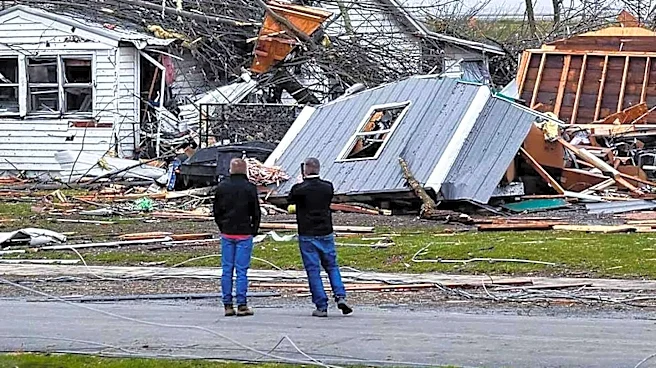
A family in Owensboro, Kentucky, has been displaced after a 100-foot, nearly 200-year-old tree crashed into their home on Parish Avenue. Homeowner Anna McKay reported that she and her children were inside when the tree fell, causing the entire house to shake
and buckling the structure. Fortunately, no one was injured. According to David Pruden, owner of Pruden Tree Service, the tree had rotten roots, which contributed to its collapse during a recent storm. The impact destroyed the entire back side of the house, shifting it off its foundation and crushing a corner. Justin McKay, Anna's husband, was at work when the incident occurred and rushed home after receiving a distressed call from his wife. The family is currently staying in a hotel and seeking an Air B&B while repairs are assessed.
Why It's Important?
This incident highlights the significant and immediate impact of natural events, such as storms combined with environmental factors like decaying trees, on residential safety and stability. For the affected family, the loss of their home represents a profound disruption, necessitating temporary housing and facing a lengthy and complex rebuilding process. The financial burden of such an event, even with insurance, can be substantial, covering not only structural repairs but also temporary living expenses and the replacement of damaged belongings. More broadly, this event underscores the importance of property maintenance, particularly the inspection and care of large, old trees, to mitigate potential hazards to homes and lives. It also serves as a reminder of the unpredictable nature of severe weather and its capacity to cause widespread damage, prompting communities to consider infrastructure resilience and emergency preparedness.
What's Next?
The McKay family anticipates being out of their home for several months as they navigate the assessment and repair process. The immediate next steps involve securing more stable temporary housing, such as an Air B&B, while they work with insurance and contractors. Justin McKay indicated that the back half of the house will likely need to be demolished and rebuilt due to the extensive damage. Authorities and tree service professionals will continue to assess the structural integrity of the remaining parts of the house and ensure the safe removal of the massive tree trunk. This incident may also prompt other homeowners in the area with large, aging trees to consider professional inspections to prevent similar occurrences, especially given the recent storm activity that contributed to this tree's fall.
Beyond the Headlines
Beyond the immediate structural damage and displacement, this event carries significant emotional and psychological implications for the McKay family. The sudden and violent destruction of their home, a place of security and personal history, can lead to lasting trauma. The experience of the house shaking and the loud crash, as described by Anna McKay, underscores the terrifying nature of such an event. The long-term process of rebuilding not only involves physical construction but also the emotional labor of recovering a sense of normalcy and security. This incident also subtly points to broader community concerns regarding urban forestry and the management of mature trees in residential areas, balancing their ecological benefits with potential risks. It may spark discussions about municipal responsibilities in monitoring and advising on the health of large trees that pose a threat to private property.