





What's Happening?
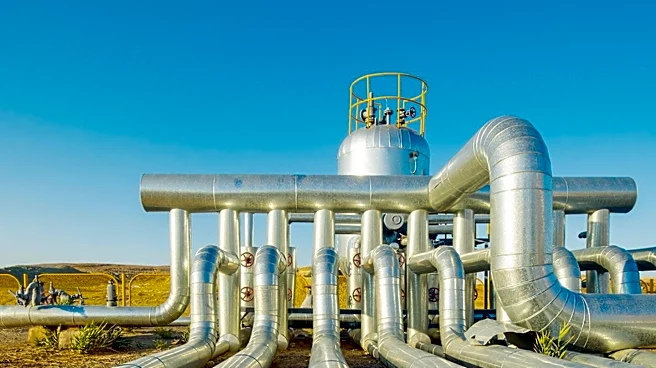
The Trans-Sahara Pipeline is a major infrastructure project designed to transport 30 billion cubic meters of gas annually from Nigeria through Niger to Algeria's export system. This pipeline is part of a broader strategy to integrate Nigeria's vast gas reserves
into Europe's pipeline network, providing a direct route for Nigerian gas to reach European markets. The project's success hinges on several factors, including technical execution, commercial viability, and political stability in regions prone to insurgency and political upheaval. The pipeline represents a significant component of Africa's gas infrastructure, offering the fastest route into Europe's existing energy framework.
Why It's Important?
The Trans-Sahara Pipeline is crucial for diversifying Europe's energy sources, especially in the context of reducing dependency on Russian gas. For Nigeria, the pipeline offers an opportunity to expand its gas exports and strengthen its position in the global energy market. However, the project's feasibility is threatened by regional instability and the need for substantial financial investment. Successful implementation could enhance energy security for Europe and economic growth for Nigeria, but failure could exacerbate existing geopolitical tensions and economic challenges in the region.
What's Next?
The future of the Trans-Sahara Pipeline depends on overcoming technical and political challenges. Stakeholders, including governments and international investors, must collaborate to ensure the project's viability. Political stability in Niger and Algeria is critical, as is securing the necessary financial backing. The project's progress will be closely monitored by European energy markets and African economic planners, with potential adjustments to timelines and strategies based on evolving geopolitical conditions.
Beyond the Headlines
The pipeline's development highlights broader issues of energy security and geopolitical dynamics in Africa and Europe. It underscores the need for sustainable investment in infrastructure and the importance of political stability in resource-rich regions. The project also raises questions about environmental impacts and the long-term sustainability of fossil fuel-based energy strategies in the face of global climate change initiatives.