






What's Happening?
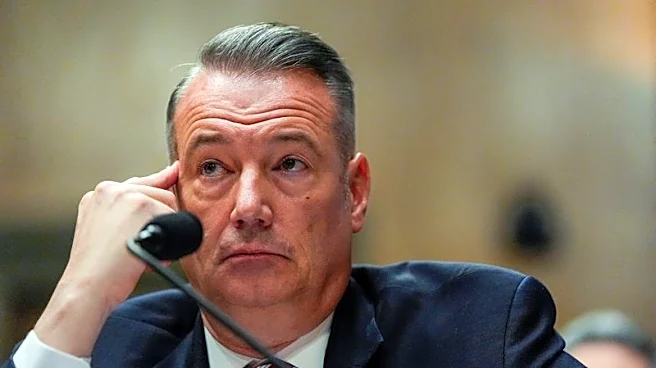
President Trump intends to nominate Cameron Hamilton, a former U.S. Navy SEAL and previous acting leader of the Federal Emergency Management Agency (FEMA), as the agency's permanent administrator. Hamilton was dismissed from his temporary role last year
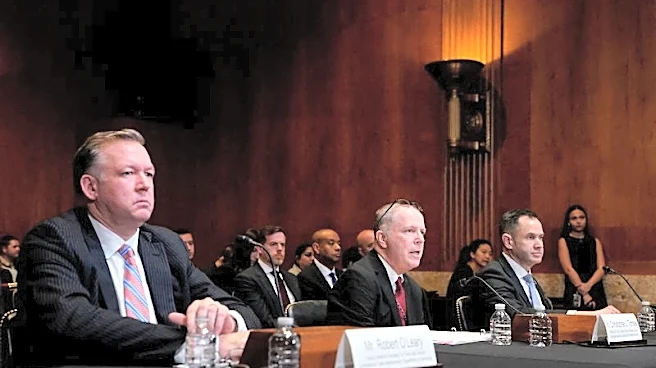
after opposing proposals to dismantle FEMA, a stance he expressed during a testimony on Capitol Hill. The agency has been without a permanent leader throughout Trump's second term, which critics argue has weakened its effectiveness. Hamilton's nomination comes at a time when FEMA's future is uncertain, with Trump advocating for more disaster management responsibilities to be shifted to states. Homeland Security Secretary Markwayne Mullin supports FEMA but calls for reforms, contrasting with his predecessor's more radical stance.
Why It's Important?
The nomination of Cameron Hamilton is significant as it highlights ongoing debates about the role and structure of FEMA. With the agency lacking a permanent leader, its ability to effectively manage federal disaster responses is in question. Hamilton's previous dismissal and his views on downsizing but not dismantling FEMA suggest potential changes in how the agency operates. This decision could impact how disaster management is handled across the U.S., affecting states' preparedness and response capabilities. The nomination also reflects broader political dynamics within the Trump administration regarding federal versus state responsibilities in disaster management.
What's Next?
If confirmed, Hamilton would become the principal advisor to the president and the Homeland Security secretary on emergency management. However, his confirmation could face challenges in the Senate due to his lack of experience as a state emergency management director. The FEMA Review Council, established by Trump, is expected to propose significant reforms, which Hamilton would likely have to implement. The outcome of these reforms could redefine FEMA's role and influence future disaster response strategies. Stakeholders, including state governments and emergency management professionals, will be closely monitoring these developments.