




What's Happening?
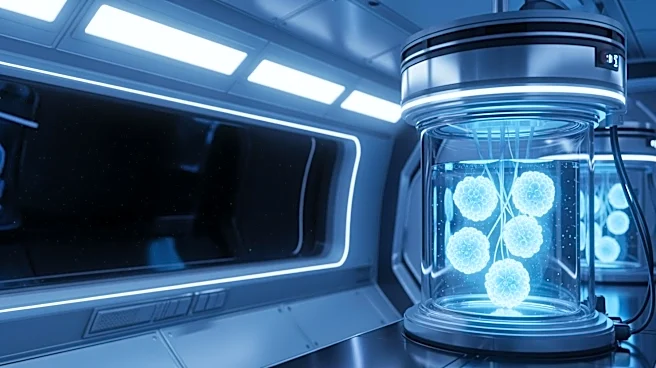
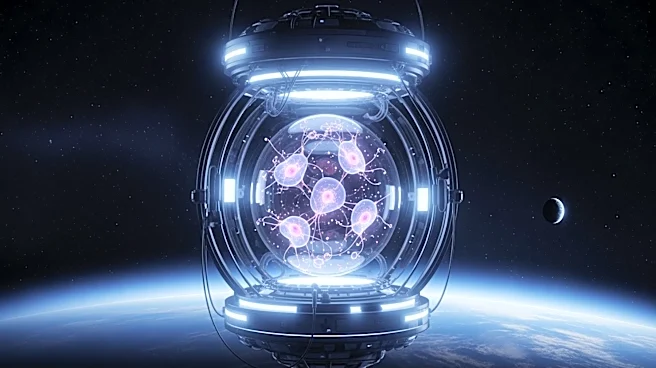
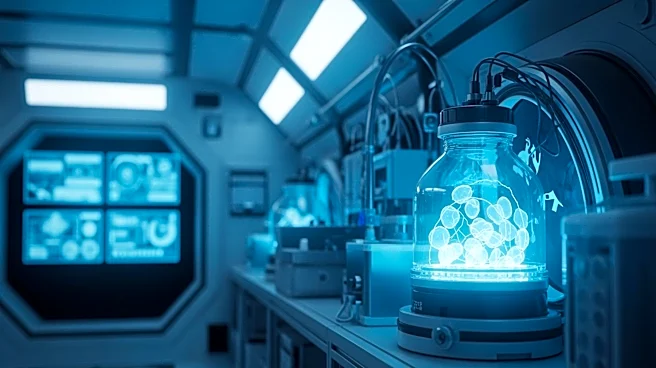
The Chinese Academy of Sciences has launched a project to test the development of artificial human embryos in space. These embryos, which mimic early-stage human embryos but cannot develop into a fetus, are being studied to understand how they develop in the absence
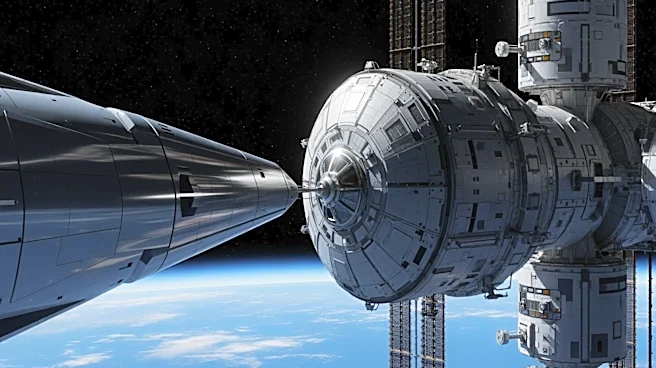
of gravity. The experiment involves two types of artificial embryos, representing two and three weeks of development, respectively. After five days of growth in space, the samples will be frozen and analyzed both onboard the Tiangong space station and back on Earth. The goal is to compare their development to those grown on Earth and explore the effects of gravity on embryonic cells.
Why It's Important?
This experiment is significant as it explores fundamental questions about human development in space, which is crucial for future long-term space missions and potential human colonization of other planets. Understanding how life evolves without gravity could impact space travel policies and the design of space habitats. The findings could also have implications for reproductive biology and the ethical considerations of human reproduction in space. As private space travel becomes more common, these insights could guide regulations and safety protocols for potential pregnancies in space.
What's Next?
The results of this experiment could lead to further studies on human development in space, potentially involving more complex biological systems. If significant differences are found between space-grown and Earth-grown embryos, it could prompt the development of new technologies or methods to support human reproduction in space. Additionally, the findings may influence international space policies and ethical guidelines regarding human life in space.