






What's Happening?
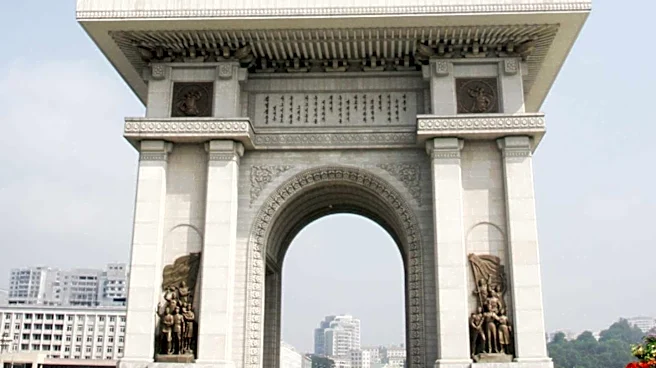
President Trump's proposed 250-foot Triumphal Arch in Washington, D.C., has been conditionally approved by the National Planning Commission, pending structural revisions. The commission has raised concerns about the arch's height, which violates the 1910
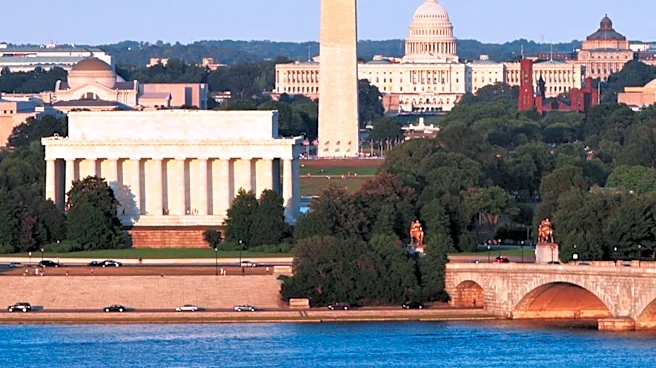
Heights of Buildings Act that limits structures to 130 feet. The Department of Interior contends that this act does not apply to federal buildings, but the commission maintains its applicability. A compromise was suggested to reduce the mezzanine and observation levels to comply with the height restriction, while allowing the statue of Lady Liberty atop the arch to reach 100 feet. The project has faced public criticism, particularly regarding its potential impact on the visual landscape of Arlington Cemetery and the surrounding historic sites. The commission has also requested revisions to pedestrian accessibility and lighting plans.
Why It's Important?
The proposed arch has sparked significant debate over its impact on Washington, D.C.'s historic skyline and the cultural significance of the area surrounding Arlington Cemetery. Critics argue that the arch could disrupt the visual and historical integrity of the site, which is a key part of the nation's heritage. The project also raises questions about federal building regulations and the extent to which they can be bypassed for new constructions. The decision to move forward with the arch, despite public opposition, highlights tensions between development ambitions and preservation efforts. The outcome of this project could set a precedent for future federal constructions in historically significant areas.
What's Next?
The National Planning Commission has not set a date for the final review of the site and building plans. The Federal Aviation Administration must conduct a full aeronautical study, and any recommendations must be incorporated into the plans. The commission's decision will likely influence future discussions on federal building regulations and the preservation of historic sites. Stakeholders, including veterans, historians, and local residents, are expected to continue voicing their concerns as the project progresses.