




What's Happening?
U.S. Rep. August Pfluger (R-TX-11) recently highlighted the critical role of the Permian Basin in U.S. and global energy production during a visit by the U.S. Energy Secretary to Midland. Pfluger emphasized that the Permian Basin, which produced approximately
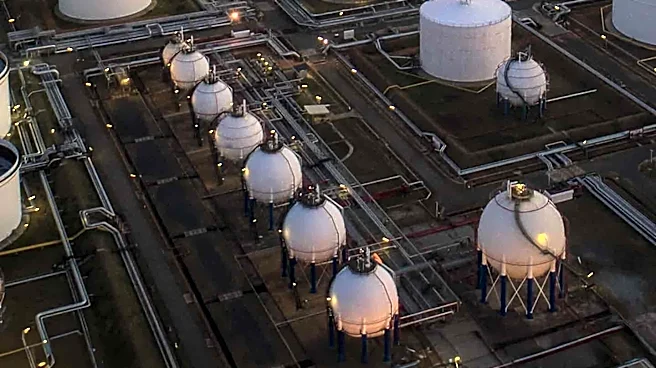
900,000 barrels of oil per day in 2010, now yields over 6.5 million barrels daily, accounting for nearly half of all oil produced in the United States. Projections suggest the region could produce up to 50 percent of domestic oil production by 2027. Additionally, natural gas production in the Permian Basin has surged from 4.5 billion cubic feet per day in 2010 to 28 billion cubic feet per day, representing almost a quarter of all natural gas produced. Pfluger previously introduced the Unlocking Our Domestic LNG Potential Act in the U.S. House, aiming to remove restrictions on natural gas exports and imports and grant the Federal Energy Regulatory Commission sole authority over approving natural gas terminal facilities. This bill has passed the House but awaits action in the U.S. Senate.
Why It's Important?
The Permian Basin's substantial and growing contribution to U.S. energy production is vital for national energy security and economic stability. Its role in supplying nearly half of the nation's oil and a significant portion of its natural gas underscores its strategic importance. Increased domestic energy production can reduce reliance on foreign sources, potentially stabilizing energy prices and bolstering the U.S. economy. Representative Pfluger's legislative efforts to streamline natural gas export approvals could further enhance the U.S.'s position as a global energy supplier, creating economic opportunities and strengthening trade relationships. However, such policies also raise environmental considerations regarding fossil fuel extraction and greenhouse gas emissions, which are subjects of ongoing debate among various stakeholders, including environmental groups and energy industry advocates. The outcome of the Unlocking Our Domestic LNG Potential Act in the Senate will significantly impact the future of U.S. natural gas policy and its global energy footprint.
What's Next?
The Unlocking Our Domestic LNG Potential Act, having passed the House, now awaits consideration in the U.S. Senate. Its progression through the Senate will determine whether the Federal Energy Regulatory Commission gains sole authority over natural gas terminal approvals and if restrictions on natural gas exports and imports are repealed. The U.S. Department of Energy currently holds authority over natural gas import and export authorizations, and a change in this regulatory framework would represent a significant shift. Stakeholders, including energy companies, environmental organizations, and international trade partners, will closely monitor the bill's progress. The debate in the Senate is likely to involve discussions on energy independence, economic benefits, and environmental impacts. If enacted, the legislation could lead to an expansion of U.S. liquefied natural gas (LNG) infrastructure and increased exports, potentially influencing global energy markets and U.S. foreign policy related to energy.
Beyond the Headlines
The ongoing debate surrounding domestic energy production and export policies, as championed by Representative Pfluger, highlights a broader tension between economic growth, energy independence, and environmental sustainability. The Permian Basin's immense output underscores the U.S.'s continued reliance on fossil fuels, even as global efforts push for a transition to renewable energy sources. The legislative push to ease LNG export restrictions could solidify the U.S.'s role as a major global energy provider, but it also raises questions about the long-term commitment to climate goals. This situation reflects a complex interplay of economic interests, geopolitical strategy, and environmental concerns, shaping the nation's energy future. The decisions made regarding these policies will have lasting implications for the U.S. economy, its international standing, and its contribution to addressing climate change, influencing everything from consumer energy costs to the development of green technologies.