


What's Happening?
Following an outbreak of hantavirus on a cruise ship returning from Argentina, widespread speculation and misinformation about the virus have circulated across digital platforms in the United States. Destiny Gonzalez, Vertebrate Zoology Collections Manager
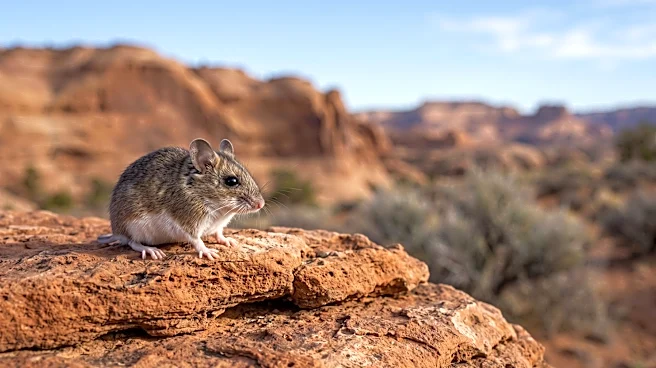
at the Natural History Museum of Utah and a hantavirus research expert, has addressed common questions and concerns to clarify the facts. She emphasized that the Andes virus, responsible for the Argentina outbreak, is not found in the U.S. and is unlikely to appear there. Gonzalez also clarified that hantavirus is not expected to cause a pandemic due to its limited person-to-person spread. The Sin Nombre hantavirus, which is present in the U.S. (including Utah's Four Corners region), is carried by the Western deer mouse and is contracted by inhaling viral particles from rodent excrement, not through human contact. She advises precautions such as avoiding sweeping or vacuuming rodent droppings, instead recommending spraying affected areas with a bleach solution before wiping.
Why It's Important?
The rapid spread of misinformation regarding health crises, as seen with the hantavirus speculation, highlights a significant public health challenge in the digital age. Unfounded fears can lead to unnecessary panic, misallocation of resources, and a lack of focus on actual risks. Gonzalez's intervention is crucial for public education, ensuring that U.S. residents understand the specific strains of hantavirus relevant to their region and how to genuinely protect themselves. This expert clarification helps to distinguish between a foreign outbreak and domestic health concerns, preventing the conflation of different viral strains and their transmission methods. It also underscores the vital role of scientific institutions like the Natural History Museum of Utah in providing accurate, evidence-based information to counter online rumors and maintain public trust in health guidance.
What's Next?
Gonzalez and the Vertebrate Zoology department at the Natural History Museum of Utah are planning to collaborate with researchers at the University of Utah to conduct a statewide hantavirus survey. This initiative aims to gain a better understanding of hantavirus distribution within Utah. Such research is critical for ongoing public health surveillance and preparedness, allowing for more targeted prevention strategies and public awareness campaigns. The continued efforts to monitor and study hantavirus in the U.S. will help ensure that any future outbreaks are met with informed responses rather than speculation. Public health officials will likely continue to emphasize reliable sources of information and encourage individuals to consult experts for health-related concerns, especially when viral speculation is prevalent.
Beyond the Headlines
The hantavirus discussion also sheds light on the historical significance of museum collections in scientific research. Gonzalez noted that in 1993, researchers utilized tissue samples from museum specimens collected decades earlier to identify the virus, proving it was not new but previously undetected. This demonstrates the enduring value of natural history collections as invaluable archives for understanding pathogens, biodiversity, and ecological changes over time. These collections serve as critical resources for retrospective studies, helping scientists trace the origins and evolution of diseases, which can inform current and future public health strategies. The ability to look back at preserved specimens provides a unique lens through which to understand emerging and re-emerging infectious diseases, reinforcing the importance of maintaining and expanding such scientific repositories.