





What's Happening?
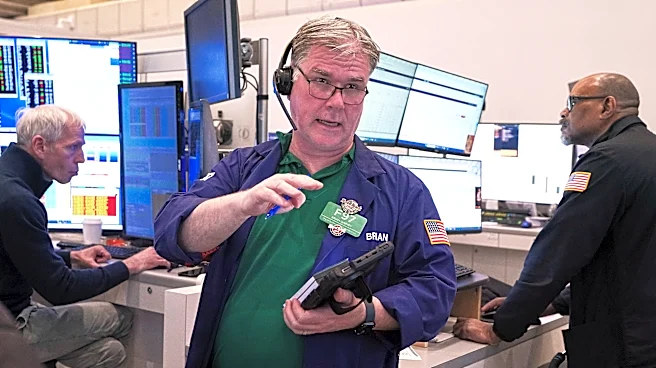
A South Korean startup, RLWRLD, is pioneering the development of AI brains for robots by capturing human techniques across various industries. Workers at locations such as the Lotte Hotel Seoul are equipped with body cameras to record their movements,
which are then used to create a database of human expertise. This data is intended to teach robots to perform tasks with human-like dexterity. RLWRLD is collaborating with companies like CJ and Lawson to gather data from logistics and retail workers, respectively. The startup aims to build an AI software layer that can be integrated into robots for use in factories and potentially homes. This initiative is part of South Korea's broader strategy to leverage its manufacturing and semiconductor strengths to become a leader in AI technology.
Why It's Important?
The development of AI robots capable of performing complex tasks has significant implications for industries reliant on skilled labor. By replicating human dexterity, these robots could enhance productivity and address workforce challenges, such as an aging population. South Korea's focus on 'physical AI' positions it to compete globally, especially against U.S. and Chinese firms investing heavily in similar technologies. However, the rise of AI robots also raises concerns about job displacement and the erosion of skilled labor, prompting calls for dialogue between workers, employers, and the government to manage the transition effectively.
What's Next?
RLWRLD plans to deploy industrial AI robots at scale by 2028, with major companies like Hyundai and Samsung also preparing to integrate humanoids into their operations. Hyundai aims to introduce robots at its factories, starting with its Georgia plant, while Samsung plans to convert its manufacturing sites into AI-driven factories by 2030. The South Korean government is investing in projects to capture the skills of master technicians for AI applications, hoping to boost productivity and mitigate workforce shortages. As these developments unfold, ongoing discussions with labor groups will be crucial to address employment concerns and ensure a smooth transition.
Beyond the Headlines
The integration of AI robots into the workforce could lead to significant cultural and ethical shifts. As robots take on more human-like roles, questions about the value of human labor and the preservation of craftsmanship arise. The potential for robots to perform delicate tasks in homes and industries also highlights the need for robust ethical guidelines and safety standards. Additionally, the success of these technologies will depend on the quality of data used to train them, emphasizing the importance of capturing precise human movements and interactions.