


What's Happening?
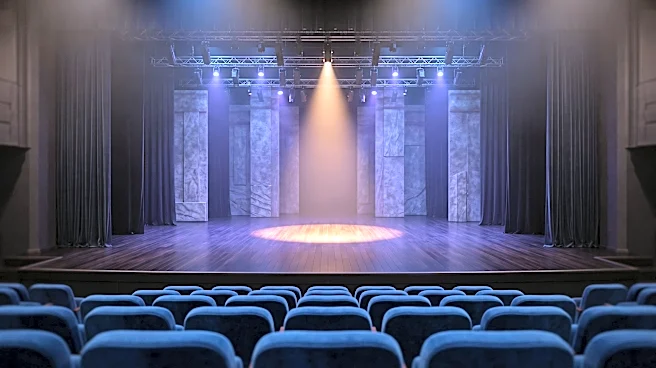
Navid Mohammadzadeh, a prominent Iranian film and theater actor, has been removed from the cast of the theater-orchestral production 'Arash'. The production team cited 'multiple controversies,' unspecified personal problems, and a 'lack of audience interest'
as reasons for his removal. This decision follows a significant social media backlash against Mohammadzadeh after he posted an image of himself wearing clothing with the Palestinian flag and publicly reaffirmed his support for Palestine, stating, "I supported Palestine before, I support it now and I will continue to support it... I simply don’t like Israel. I will definitely choose Palestine forever." The controversy surrounding his pro-Palestine stance, a position strongly backed by the Iranian state, appears to have become a liability with the public, leading to his removal from the play. This incident highlights a rare reversal where a pro-state position has seemingly led to commercial repercussions for an artist in Iran.
Why It's Important?
This event is important as it reveals a growing divergence between the Iranian state's long-standing pro-Palestine ideology and public sentiment, which appears to be increasingly critical of the government's foreign policy priorities. For decades, supporting Palestine has been a cornerstone of the Islamic Republic's identity, with the state providing significant financial and military aid to Palestinian groups. However, this policy has coincided with severe economic challenges within Iran, leading to public slogans like "Neither Gaza nor Lebanon, my life for Iran." The removal of a high-profile actor for a pro-Palestine stance, despite it aligning with state ideology, suggests that public opinion, influenced by economic hardship and a desire for domestic focus, is now impacting cultural and commercial spheres. This could signal a shift in how cultural figures navigate political expression in Iran, where previously, challenging state-sanctioned causes carried risks, but now, even aligning with them can lead to professional consequences due to public disapproval.
What's Next?
The removal of Navid Mohammadzadeh from 'Arash' raises questions about the future of cultural productions in Iran and the extent to which public sentiment will be allowed to influence state-backed ideologies. Hardline media, such as Farhikhtegan newspaper, have already criticized the decision, framing it as punishment for supporting Palestine and questioning if "invisible red lines" are emerging where pro-Palestine views could lead to boycotts. Public theater performances in Iran require authorization from the Ministry of Culture and Islamic Guidance, giving the state considerable leverage. It remains to be seen whether the 'Arash' production will face official pressure for a decision that visibly contradicts state political priorities. If Mohammadzadeh's removal stands without official repercussions for the production, it could set a precedent, indicating that public pressure can now exert tangible influence within Iran's state-regulated cultural system, potentially leading to more artists and productions carefully considering public reception of political stances.
Beyond the Headlines
This incident delves into the complex interplay between state ideology, public opinion, and cultural expression in Iran. Historically, Iranian artists faced severe consequences for deviating from state-sanctioned narratives. However, Mohammadzadeh's case presents an unusual inversion: he embraced a core state ideology, yet faced professional repercussions due to perceived lack of audience interest. This suggests a deeper societal shift where the public's priorities are increasingly diverging from the state's, particularly concerning foreign policy expenditures amidst domestic economic struggles. The episode highlights the limitations of state control in an era of social media, where public sentiment, even if not explicitly anti-state, can manifest in ways that impact commercial viability. It also underscores the ethical dilemma for artists in a controlled environment, where navigating public and state expectations can be a precarious balance, potentially leading to a re-evaluation of what constitutes a 'safe' political stance in the Iranian cultural landscape.