






What's Happening?
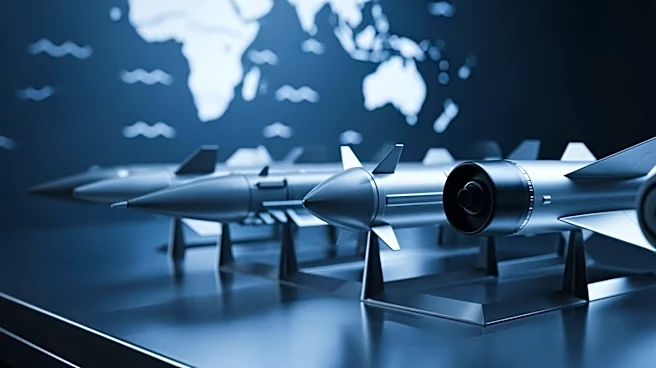
The United States has deployed anti-ship missile launchers to the Northern Philippines near the Luzon Strait as part of the Balikatan 2026 military exercises. This deployment involves approximately 1,300 Marines and Sailors from the Hawaii-based 3rd Marine Littoral
Regiment. The regiment is participating in maritime strike, coastal defense, and sea denial operations. The deployment of the Naval Strike Missile-equipped Navy-Marine Corps Expeditionary Ship Interdiction System (NMESIS) is part of a broader U.S.-Philippine alliance focus on the Luzon Strait, a strategic area amid concerns over potential spillover from a Taiwan contingency. The NMESIS systems are stationed at Cagayan North International Airport, allowing them to strike targets up to 185 kilometers into the waters between the Philippines and Taiwan. This marks the fourth year of the regiment's participation in Balikatan, emphasizing the deepening military relationship between the U.S. and the Philippines.
Why It's Important?
The deployment of U.S. anti-ship missiles in the Philippines underscores the strategic importance of the Luzon Strait, a critical passage in the first island chain. This move is significant in the context of rising tensions in the South China Sea and concerns over China's regional ambitions. The presence of advanced U.S. military capabilities in the Philippines enhances the country's defense posture and serves as a deterrent against potential aggression. It also reflects the strengthening of U.S.-Philippine military ties, which could have broader implications for regional security dynamics. The deployment is part of a pattern of increased U.S. military engagement in Southeast Asia, aimed at countering China's influence and ensuring freedom of navigation in vital maritime corridors.
What's Next?
The Balikatan 2026 exercises will continue with several coastal and maritime strike drills planned throughout Northern Luzon. These activities will involve not only U.S. forces but also Japanese and Philippine anti-ship launchers, including Japan Ground Self-Defense Force Type 88 and Philippine Marine Corps BrahMos missiles. The exercises are expected to enhance interoperability among the participating forces and demonstrate the capability to conduct joint operations in the region. The ongoing military collaboration may prompt reactions from China, which has previously expressed concerns over U.S. military activities in the region. The outcome of these exercises could influence future U.S. military deployments and defense cooperation agreements in Southeast Asia.