





What's Happening?
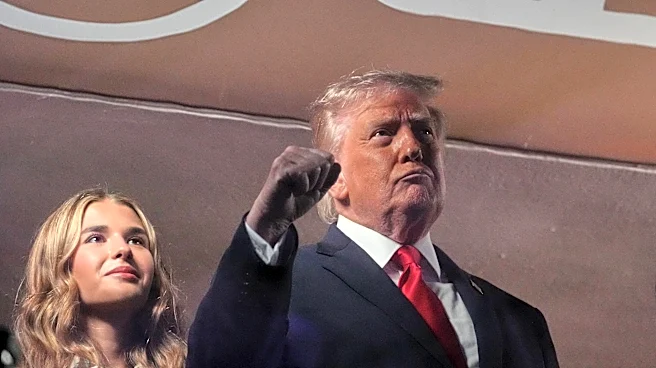
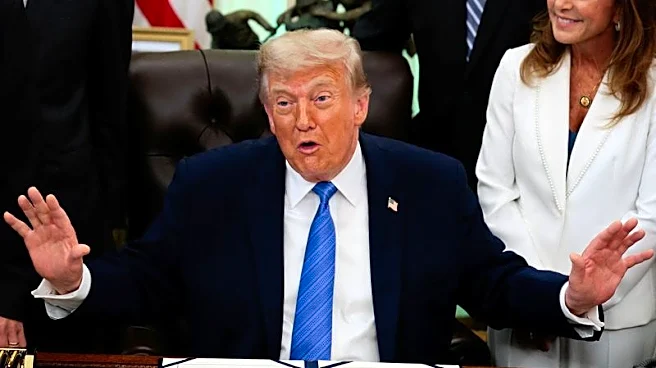
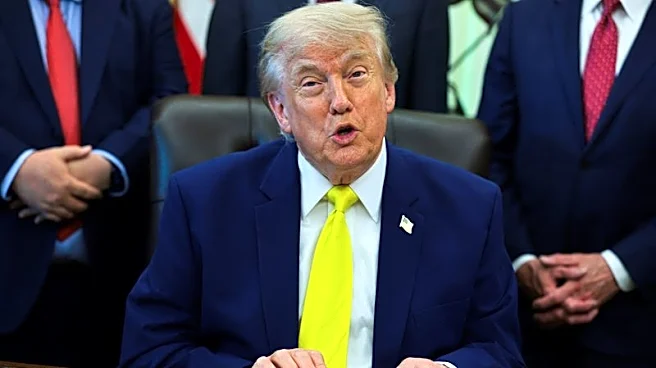
President Donald Trump has taken an unexpected stance on the issue of inflation, expressing a positive view despite the consumer price index rising by 4.2% over the past year. This increase marks the highest level of inflation since April 2023. Traditionally,
inflation is a concern for voters, especially with the upcoming midterm elections, where the economy is a top issue. However, Trump has shifted his narrative, attributing the rise in prices to the ongoing conflict with Iran, which has affected global oil supplies. He claims that a secret military operation has successfully transported 100 million barrels of oil through the Strait of Hormuz, a critical shipping channel, which he argues will help alleviate the situation. This statement has sparked reactions from political figures, with Democrats using it to criticize Trump's handling of the economy.
Why It's Important?
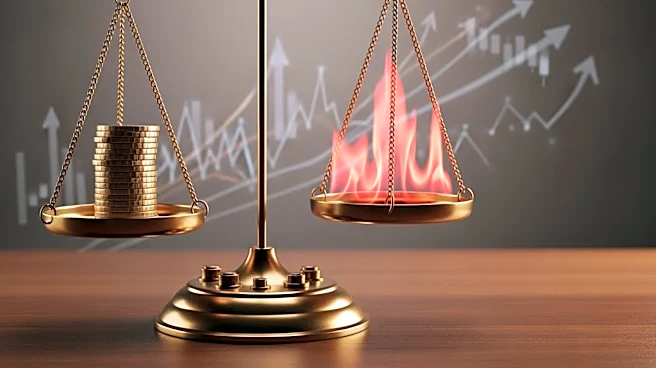
The issue of inflation is significant as it directly impacts the cost of living for Americans, affecting everything from groceries to gas prices. President Trump's comments and the subsequent political reactions highlight the contentious nature of economic policy in the U.S. The administration's handling of the Iran conflict and its impact on oil prices is crucial, as energy costs are a major component of inflation. The president's optimistic view contrasts with the concerns of many voters and financial markets, which remain cautious about the potential for further economic instability. The situation underscores the complex interplay between international conflicts and domestic economic conditions, with potential implications for the upcoming elections.
What's Next?
As the situation develops, the administration's ability to manage both the Iran conflict and domestic economic concerns will be closely scrutinized. The effectiveness of the claimed military operation in stabilizing oil prices will be a key factor in determining future inflation trends. Political leaders and financial markets will likely continue to monitor the administration's actions and statements, with potential impacts on voter sentiment and market confidence. The outcome of these developments could influence policy decisions and electoral strategies as the midterm elections approach.