





What's Happening?
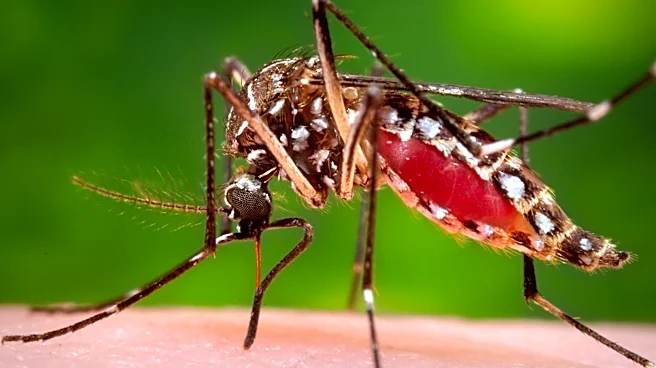
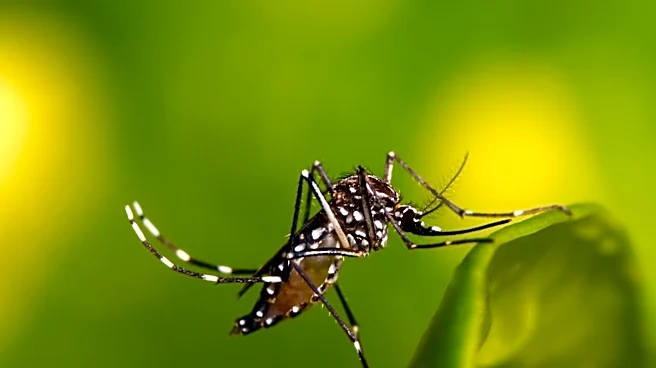
A recent study published in the journal Parasites & Vectors has provided a detailed analysis of Wolbachia infection patterns in the Asian tiger mosquito (Aedes albopictus) across the Hawaiian Islands. This mosquito species is a significant vector for
diseases such as dengue, chikungunya, and Zika viruses. The research, led by Sangwoo Seok and senior authors Eric P. Caragata and Yoosook Lee of the Florida Medical Entomology Laboratory at the University of Florida, found that Wolbachia is nearly universally present in Hawaiian Aedes albopictus populations, with 98.5% of tested mosquitoes infected. However, the composition of these infections is more complex than previously assumed. While every infected specimen carried the wAlbB strain, only 28.6% were superinfected with wAlbA, meaning the majority carry only a single Wolbachia strain. This finding deviates from the typical assumption of double infection for this species. The study also revealed sex-specific differences in infection dynamics, with females more likely to harbor wAlbA and exhibiting higher bacterial density for both strains. Environmental factors like island of collection and precipitation also influenced wAlbA prevalence.
Why It's Important?
The findings of this study are crucial for public health planners in Hawaii and other regions grappling with mosquito-borne diseases. Wolbachia-based biological control strategies, such as the incompatible insect technique and pathogen-blocking approaches, rely on predictable interactions between Wolbachia strains in released and wild mosquito populations. The discovery that Hawaiian Aedes albopictus populations predominantly carry a single Wolbachia strain (wAlbB) rather than the expected double infection (wAlbA and wAlbB) means that current assumptions for control programs may be flawed. If released mosquitoes carry different strain combinations than the wild population, the effectiveness of population suppression efforts could be significantly diluted. Furthermore, the sex-skewed distribution of native strains and the influence of environmental factors on infection dynamics add layers of complexity that must be considered. Without a precise understanding of these native Wolbachia patterns, interventions designed to combat chikungunya, dengue, and Zika could be less effective or even fail, potentially leading to continued or increased disease transmission.
What's Next?
The study emphasizes the critical need for baseline surveillance before implementing Wolbachia-based interventions. Future projects in Hawaii and similar regions must account for the varying patterns of infection, rather than assuming uniform superinfection across mosquito populations. Researchers and public health officials will need to conduct more targeted studies to understand the specific Wolbachia strain combinations and densities in local mosquito populations. This detailed understanding will inform the design of more effective and tailored biological control strategies. The U.S. Environmental Protection Agency’s Science to Achieve Results program, the USDA National Institute of Food and Agriculture, and the National Institutes of Health, which funded this study, will likely continue to support research into these complex biological interactions to develop robust solutions for mosquito-borne disease control.
Beyond the Headlines
This research highlights a broader challenge in ecological interventions: the need for granular, localized data to inform global strategies. The assumption of uniform biological characteristics across a species' range can lead to ineffective or even counterproductive outcomes. In the context of mosquito control, this means that a 'one-size-fits-all' approach to Wolbachia-based interventions may not be viable. The ethical implications of altering natural insect populations also come into play, requiring careful consideration of potential unintended ecological consequences. As Hawaii faces recurring outbreaks of dengue and the expanding range of mosquito vectors due to a warming climate, understanding these 'invisible bacterial passengers' becomes not just a scientific endeavor but a practical necessity for safeguarding public health and maintaining ecological balance. The study underscores the intricate relationship between microorganisms, insects, and human health, pushing the boundaries of vector biology and disease prevention.