

What's Happening?
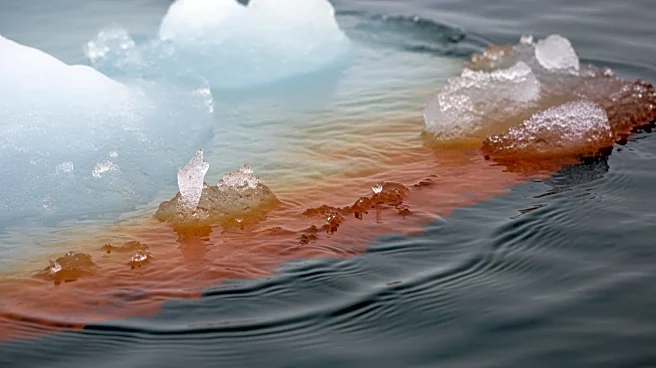
Researchers have discovered that the iron released by melting ice in West Antarctica is not in a form that benefits marine life, according to a study reported by ScienceDaily. Typically, iron in the ocean supports algae growth, which is crucial for absorbing
carbon pollution. However, the chemical properties of the iron-rich sediment have been altered by extreme weathering, making it difficult for algae to utilize it for growth. This change could lead to a reduction in algae populations, thereby decreasing the ocean's ability to absorb carbon dioxide, a key factor in mitigating global warming. The study highlights the potential for increased erosion of iron-rich layers beneath glaciers as the West Antarctic Ice Sheet continues to thin, further exacerbating the issue.
Why It's Important?
The findings are significant because they challenge the assumption that the ocean's capacity to absorb carbon dioxide is constant. Iron plays a critical role in fertilizing algal populations in the Southern Ocean, which in turn helps the ocean absorb more carbon dioxide, contributing to global cooling. The altered chemical properties of the iron-rich sediment mean that algae populations may not expand as expected, reducing carbon uptake and potentially worsening the effects of rising temperatures. This could lead to severe consequences such as rising sea levels, which threaten to contaminate freshwater sources, cause flooding, and displace millions of people worldwide.
What's Next?
Researchers are actively seeking solutions to address the challenges posed by melting glaciers and icebergs. Efforts include creating artificial glaciers, using insulating blankets, and securing legal protections. On an individual level, organizations like the Antarctic and Southern Ocean Coalition recommend supporting leaders focused on solutions and adopting sustainable practices such as carpooling, recycling, and consuming more plant-based meals. These actions, combined with scientific advancements, aim to mitigate the impact of climate change and preserve the ocean's ability to absorb carbon.
Beyond the Headlines
The discovery underscores the complex interplay between climate change and marine ecosystems. It highlights the need for comprehensive strategies that address both the immediate and long-term impacts of environmental changes. The study also raises ethical considerations regarding the responsibility of global communities to protect vulnerable ecosystems and the importance of international cooperation in climate action. As the effects of climate change become more pronounced, the role of scientific research in informing policy and public awareness becomes increasingly critical.