
What's Happening?
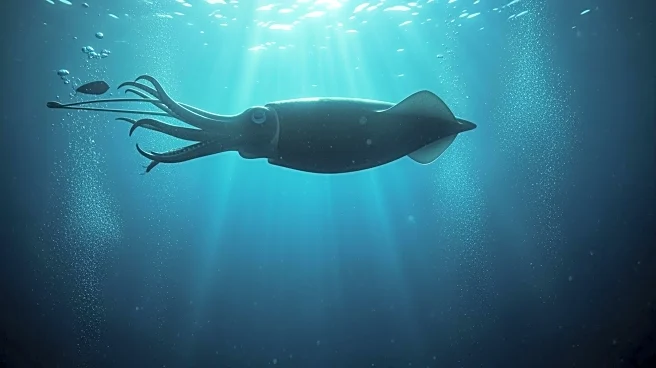
Dr. Michelle Taylor and her team from the Ocean Census have made a groundbreaking discovery of a colossal squid during a deep-sea expedition near the South Sandwich Islands in the south Atlantic Ocean.
The juvenile squid, measuring 30cm in length, was captured on video at a depth of 600 meters. This marks the first time in 100 years that a colossal squid has been filmed, making it a significant find in marine biology. The expedition, which was livestreamed, also uncovered other rare species such as zombie worms and a carnivorous 'death-ball' sponge. The research was conducted using a remotely operated vessel, and the footage was shared widely on social media, drawing attention to the expedition's success.
Why It's Important?
The discovery of the colossal squid is a major milestone in marine research, highlighting the potential for new scientific insights into deep-sea ecosystems. This find underscores the importance of exploring remote oceanic regions, which remain largely uncharted and could hold keys to understanding biodiversity and climate change impacts. The expedition's success in capturing live footage of such a rare species demonstrates the value of technological advancements in marine exploration. It also raises awareness about the relatively untouched ecosystems that exist in the deep sea, which are crucial for maintaining global biodiversity.
What's Next?
Following this discovery, there may be increased interest and funding for further deep-sea exploration missions. Researchers could focus on studying the behavior and habitat of the colossal squid and other newly discovered species. The findings may also prompt discussions on the conservation of deep-sea environments, as these areas face threats from climate change and human activities. The Ocean Census team is likely to continue analyzing the collected data and specimens to publish detailed scientific reports, which could contribute to broader ecological and environmental studies.