









What's Happening?
The American West is facing a dual challenge as iconic lakes and reservoirs continue to shrink while the region becomes a hub for AI infrastructure development. States like Utah, Arizona, and Nevada, which are leading in AI data center construction, are also
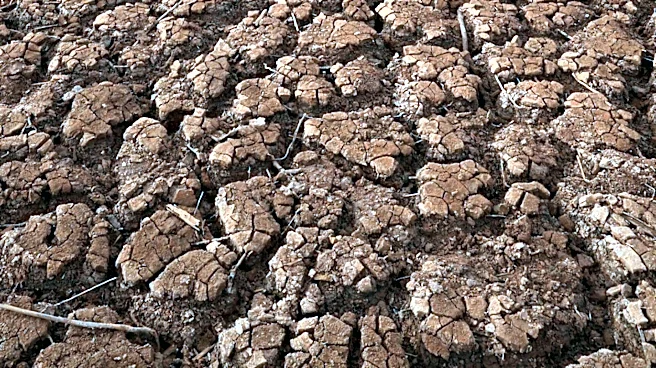
among the most water-stressed areas in the country. The Great Salt Lake in Utah, Lake Mead and Lake Powell on the Colorado River, California's Salton Sea and Mono Lake, and Walker Lake in Nevada have all experienced significant declines due to water diversions, drought, and rising temperatures. This has raised concerns about ecosystem collapse and dust pollution. The construction of data centers, which are water-intensive, adds to the pressure on these already strained water resources.
Why It's Important?
The shrinking of these lakes poses significant risks to millions of residents and the environment. For instance, the Great Salt Lake's decline could lead to dust pollution affecting 2.5 million people living along Utah's Wasatch Front. The construction of AI data centers in these regions exacerbates the water crisis, as these facilities require substantial water for cooling systems. This situation highlights the tension between economic development and environmental sustainability. Policymakers are urged to consider the impact of data centers on local water supplies and to demand transparency in water usage reporting from these facilities.
What's Next?
As AI infrastructure continues to expand, there is a growing need for policymakers to balance technological advancement with water conservation. This includes implementing stricter regulations on water usage reporting by data centers and exploring more efficient cooling technologies. Local governments must evaluate the impact of proposed facilities on community water resources. The ongoing water crisis and the expansion of AI infrastructure present a complex challenge that requires coordinated efforts to ensure sustainable development.
Beyond the Headlines
The convergence of the water crisis and AI infrastructure development in the American West underscores broader environmental and economic challenges. The situation calls for a reevaluation of resource management strategies to support technological growth without compromising environmental health. The role of AI in economic growth and national competitiveness must be balanced with the need for sustainable water management practices.