
What's Happening?
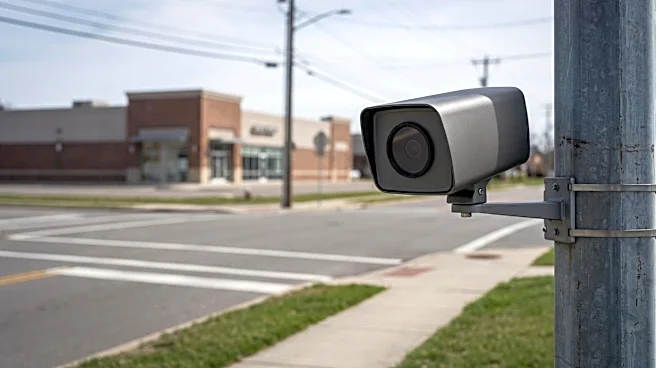
The York Police Department in Maine is taking down its Flock license plate cameras, a decision announced by Police Chief Owen Davis at a recent select board meeting. This action comes weeks before York voters
are scheduled to decide in November whether to permanently ban the technology. Chief Davis indicated that while most residents have not expressed concerns about the York Police Department's use of the cameras, there is broader apprehension regarding the technology and the company behind it. This move follows similar actions in other Maine communities, including South Portland, which removed its Flock cameras in June due to public pushback. The police chief stated his intention to remove the cameras immediately if there were no objections from citizens, board members, or the town manager.
Why It's Important?
The removal of Flock license plate cameras by the York Police Department, and similar actions in other Maine towns, highlights a growing debate across the U.S. regarding privacy concerns versus public safety. Automated license plate readers (ALPRs) offer law enforcement agencies a powerful tool for tracking vehicles, identifying stolen cars, and assisting in criminal investigations. However, civil liberties advocates and some residents argue that the widespread use of such technology constitutes mass surveillance, infringing on privacy rights by collecting and storing data on innocent citizens' movements. This local decision in York, coupled with the upcoming voter referendum, could set a precedent for how other communities in Maine and potentially beyond address the deployment of ALPR technology, influencing future policy and public acceptance of surveillance tools in policing.
What's Next?
Following the immediate removal of the Flock license plate cameras by the York Police Department, the focus will shift to the November ballot, where York voters will have the final say on whether to permanently ban the technology. The outcome of this vote will be a significant indicator of public sentiment regarding ALPRs and could influence future decisions by other municipalities considering or currently using similar surveillance systems. Law enforcement agencies and technology providers will likely monitor the results closely, as a permanent ban could prompt reevaluation of their strategies for deploying and managing such systems. Community discussions and advocacy efforts from both privacy advocates and public safety proponents are expected to intensify leading up to the November vote.
Beyond the Headlines
The controversy surrounding automated license plate readers in York and other communities extends beyond immediate privacy concerns to touch upon fundamental questions about the balance of power between the state and its citizens in the digital age. The debate over ALPRs reflects a broader societal tension regarding technological advancements and their ethical implications. The ability of these cameras to collect vast amounts of data on vehicle movements raises questions about data retention policies, potential for misuse, and the scope of government surveillance. This situation underscores the need for clear legislative frameworks and public discourse to define acceptable limits for technology in policing, ensuring that tools designed for public safety do not inadvertently erode civil liberties or foster a surveillance society.