



What's Happening?
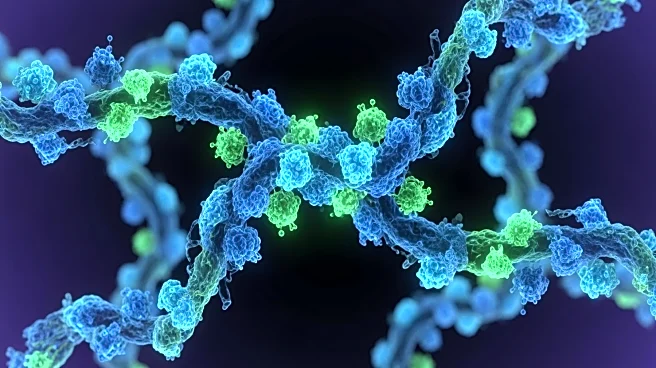
Scientists have discovered that a type of giant virus, known as Acanthamoeba polyphaga mimivirus, can multiply rapidly by hijacking its host's protein-making machinery. This virus creates a complex of three proteins that take over the host's protein-production
system, leading to the production of viral proteins instead of the host's own. The findings, published in Cell, confirm long-held suspicions among virologists that viruses can co-opt cellular systems. The mimivirus, notable for its large genome, infects single-celled organisms like amoebae and protozoa. Researchers genetically engineered the virus to lack these proteins, resulting in a significant slowdown in its multiplication rate.
Why It's Important?
This discovery is significant as it provides experimental evidence of how viruses can manipulate host cellular machinery, a process that could have implications for understanding viral infections and developing treatments. The ability of the mimivirus to hijack protein production highlights the sophisticated mechanisms viruses can evolve to ensure their survival and proliferation. This knowledge could inform future research into viral behavior and lead to new strategies for combating viral infections, potentially impacting public health and virology research.