








What's Happening?
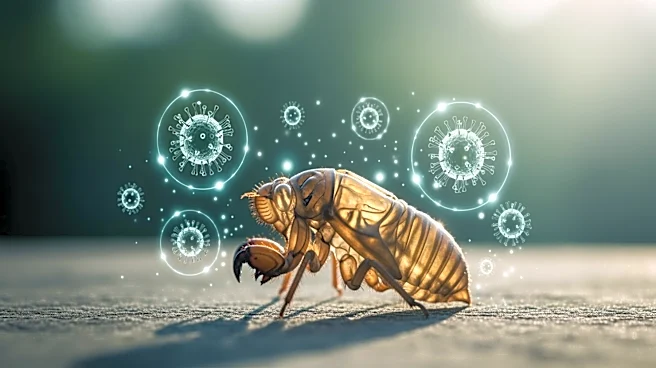
A 58-year-old woman in Greece experienced a rare medical condition where she sneezed out larvae of the sheep bot fly (Oestrus ovis) from her nose. The woman, who worked outdoors near grazing sheep, initially developed facial pain and a severe cough. Medical
examination revealed that the larvae had lodged in her maxillary sinuses. An ear, nose, and throat specialist surgically removed 10 larvae and one pupa from her sinuses. The larvae were identified as belonging to the sheep bot fly, a parasite typically found in the nasal passages of sheep and goats. The woman was diagnosed with O. ovis nasal myiasis with pupation and treated with nasal decongestants, leading to a complete recovery.
Why It's Important?
This case highlights a rare instance of human infection by the sheep bot fly, which typically affects animals. The occurrence of pupation in a human host is considered biologically implausible, suggesting potential evolutionary adaptations of the parasite. Such cases underscore the need for awareness among clinicians in regions where these flies are endemic. The incident also raises questions about the potential for similar infections in humans working in close proximity to livestock, emphasizing the importance of monitoring and preventive measures in such environments.
What's Next?
Further research is needed to understand the conditions that allowed the larvae to mature in a human host. This could involve studying anatomical or physiological factors that may facilitate such infections. Additionally, increased awareness and reporting of similar cases could help in developing guidelines for diagnosis and treatment. The medical community may also explore preventive strategies for individuals at risk of exposure to these parasites.
Beyond the Headlines
The case presents an opportunity to explore the broader implications of zoonotic infections, where diseases are transmitted from animals to humans. It highlights the intersection of human health and environmental factors, particularly in rural and agricultural settings. Understanding such infections can contribute to better public health strategies and inform policies on occupational health and safety for workers in agriculture and animal husbandry.