






What's Happening?
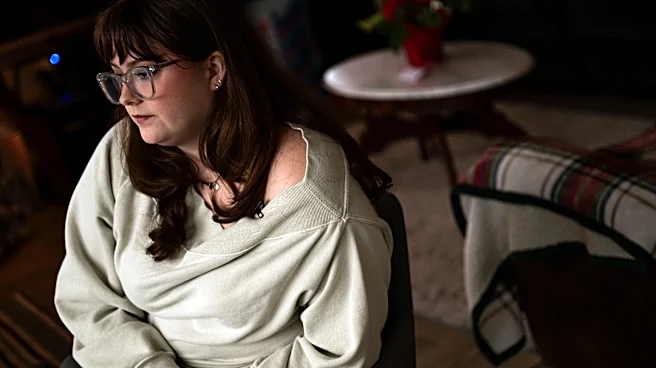
The article discusses the enduring impact of domestic violence on survivors, particularly focusing on the psychological and emotional challenges they face. Eboni Delaney, a survivor of domestic violence, shares her personal experiences of growing up in a violent
household and the lasting effects it has had on her life. She highlights the recurring trauma triggered by news headlines about domestic violence incidents, which often bring back painful memories. Delaney emphasizes that trauma from domestic violence is not easily overcome and that survivors need the freedom to live with their experiences rather than being pressured to 'get over it.' The article also notes the prevalence of domestic violence in the U.S., where a woman is killed by an intimate partner approximately every eight hours.
Why It's Important?
This narrative sheds light on the broader societal issue of domestic violence and its long-term effects on survivors. It underscores the need for greater awareness and support systems for those affected. The psychological impact of domestic violence can lead to conditions such as PTSD, affecting survivors' mental health and quality of life. The article calls for a shift in societal attitudes, advocating for understanding and support rather than judgment. This is crucial for creating an environment where survivors can heal and rebuild their lives. The story also highlights the importance of addressing domestic violence at a systemic level to prevent future incidents and support those who have been affected.
What's Next?
The article suggests that ongoing support and understanding are essential for survivors of domestic violence. It calls for increased public awareness and education to change societal perceptions and provide better support systems. There is a need for policies that address the root causes of domestic violence and offer comprehensive support to survivors. Mental health services, legal assistance, and community support networks are vital in helping survivors cope with their experiences and move forward. The narrative also implies that media coverage should focus not only on the incidents but also on the aftermath and the needs of survivors.
Beyond the Headlines
The story highlights the complex nature of trauma and the societal expectations placed on survivors to 'move on.' It challenges the notion that healing is a linear process and emphasizes the importance of allowing survivors to process their experiences at their own pace. The article also touches on the intergenerational impact of domestic violence, where children who grow up in violent environments may carry the trauma into adulthood. This underscores the need for early intervention and support for children in such situations to break the cycle of violence.