



What's Happening?
A senior official from UN Women, Nyaradzayi Gumbonzvanda, has called for renewed international efforts to end the Taliban's restrictions on girls' education and women's right to work in Afghanistan. Gumbonzvanda, the deputy executive director of UN Women, emphasized
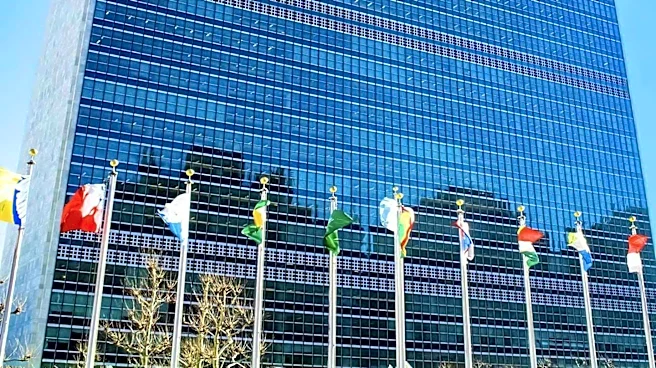
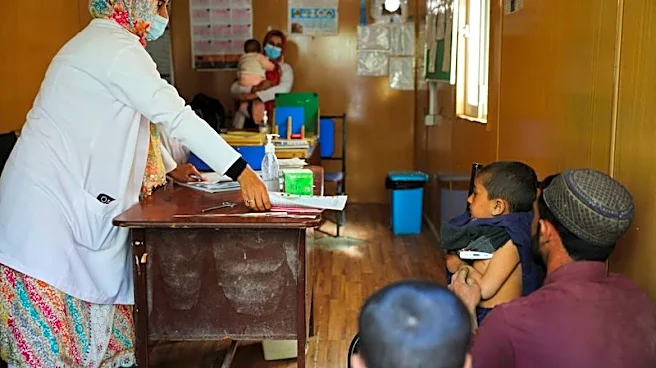
the need for the United Nations to continue advocating for equality and human rights in the country. Her remarks followed a meeting with Richard Bennett, the UN special rapporteur on human rights in Afghanistan, during a high-level week of meetings focused on Women, Peace and Security. Gumbonzvanda highlighted the importance of Bennett's mandate and reports in supporting UN efforts to protect the rights of women and children. She stressed the necessity of lifting the Taliban's bans on girls' education beyond the sixth grade and women's access to employment and public life, which have been in place since August 2021. UN Women Afghanistan continues to work with local communities to find solutions and support those affected, coordinating with other UN agencies like UNICEF.
Why It's Important?
The ongoing restrictions imposed by the Taliban have severe implications for human rights and gender equality in Afghanistan, impacting the lives of millions of women and girls. The call from a high-ranking UN Women official underscores the international community's persistent concern and commitment to addressing these issues. These restrictions not only violate fundamental human rights but also hinder Afghanistan's social and economic development by excluding a significant portion of its population from education and the workforce. The UN's continued advocacy, supported by reports from special rapporteurs, is crucial for maintaining international pressure on the Taliban and for documenting the human rights situation. The efforts by UN Women and other agencies on the ground are vital for providing support and identifying solutions for affected communities, demonstrating the global responsibility to protect vulnerable populations.
What's Next?
The upcoming 16 Days of Activism Against Gender-Based Violence campaign is identified as a key opportunity for the international community to strengthen its collective voice against the structural violence, discrimination, and exclusion faced by women and girls in Afghanistan. This period will likely see increased advocacy, awareness campaigns, and diplomatic efforts aimed at pressuring the Taliban to reverse their restrictive policies. The UN and its partners are expected to continue their engagement with Afghan communities to mitigate the impact of these restrictions and to seek avenues for promoting women's rights. Further reports from UN special rapporteurs and ongoing discussions within UN forums will likely keep the issue on the international agenda, potentially leading to renewed calls for action from member states and international organizations.
Beyond the Headlines
The Taliban's policies represent a significant rollback of women's rights, challenging international norms and conventions on gender equality and human rights. This situation highlights the complex interplay between cultural interpretations, political power, and universal human rights principles. The international community's response, while unified in condemnation, faces challenges in effectively influencing the Taliban's governance. The long-term implications include the potential for a lost generation of educated women and girls, exacerbating poverty and social instability. Furthermore, the situation raises questions about the efficacy of international diplomacy and humanitarian aid in contexts where fundamental human rights are systematically denied. The ongoing struggle for women's rights in Afghanistan serves as a critical case study for global efforts to promote and protect human rights in conflict-affected regions.