







What's Happening?
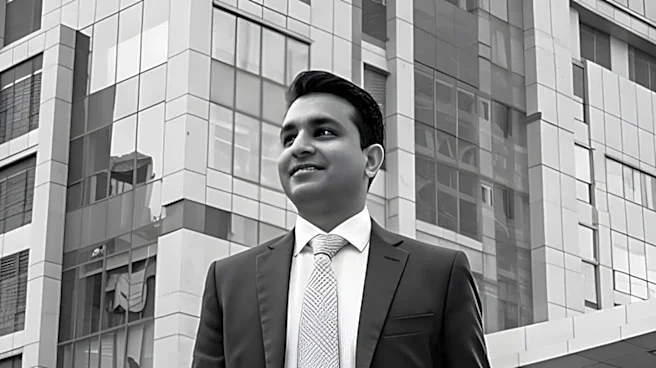
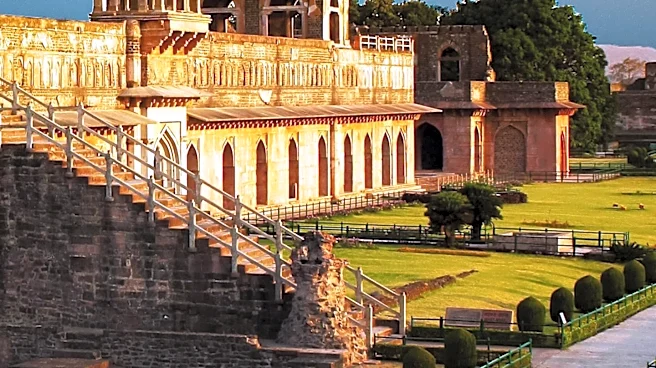
Architect Abha Narain Lambah has dedicated three decades to the preservation of India's significant historic sites, ranging from ancient Buddhist caves and Islamic tombs to Hindu temples and Mumbai's colonial-era Gateway of India. Lambah's work began
out of concern for the decay of heritage structures in India, a nation experiencing rapid urban development. She has been instrumental in saving hundreds of historic buildings in Mumbai that were not under government protection due to being considered 'too young' for national monument status. Her efforts often involve bringing together private donors, foundations, and community groups to fund restoration projects, as seen with Mumbai's 19th-century David Sassoon Library and Keneseth Eliyahoo Synagogue. Lambah emphasizes that these buildings, though some are colonial, are deeply Indian, built with the labor and materials of the country, and represent a continuous historical narrative that should not be discarded.
Why It's Important?
Lambah's work is crucial for preserving India's diverse architectural heritage, which faces threats from rapid urbanization, neglect, and redevelopment. Her advocacy highlights the ongoing tension between development and conservation in fast-growing economies. By saving these structures, she ensures that future generations can connect with their cultural past and that these sites continue to serve as active cultural spaces. The preservation of these buildings also has economic implications, as they can attract tourism and contribute to local economies. Furthermore, her efforts to mobilize private and community funding set a precedent for how heritage conservation can be achieved outside of direct government intervention, fostering a sense of collective responsibility for cultural assets. Her argument that colonial-era buildings are integral to India's heritage challenges narrow interpretations of national identity and promotes a more inclusive view of history.
What's Next?
Lambah continues her work on major landmarks, including the Gateway of India, and advocates for broader heritage regulations and increased funding for conservation across India. The growing number of young architects studying and practicing conservation offers a hopeful outlook for the future of heritage preservation in the country. However, Lambah acknowledges that the task remains immense, requiring sustained effort to catch up with the pace of urban development and decay. Future efforts will likely focus on expanding city-wide heritage listings, securing more diverse funding sources, and continuing to raise public awareness about the value of historical architecture. The ongoing challenge will be to balance the demands of modernization with the imperative to protect cultural heritage, ensuring that India's past is not lost in its pursuit of progress.
Beyond the Headlines
The struggle to preserve India's architectural heritage, as championed by Lambah, reflects a global challenge faced by many developing nations: how to reconcile rapid economic growth and modernization with the protection of cultural identity and historical memory. Her work delves into the ethical question of what constitutes 'heritage' and whether colonial structures should be preserved. Lambah's perspective—that these buildings are 'as Indian as they get' due to their construction by Indian labor and materials—offers a nuanced view that transcends post-colonial resentment, advocating for a comprehensive understanding of history. This approach encourages a deeper appreciation of the complex layers of a nation's past, fostering a more inclusive cultural narrative. The long-term implications include shaping national identity, influencing urban planning policies, and promoting sustainable development that values both progress and preservation.