








What's Happening?
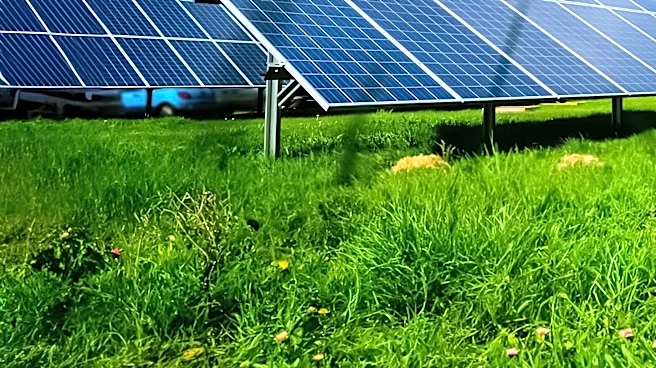
A discussion has emerged regarding the placement of solar panels, questioning why they are often installed on green spaces instead of over car parks. The debate, highlighted in a recent article, suggests that solar panels on car parks could alleviate
strain on the local electricity grid by promoting local generation. However, for national-level energy needs, larger installations are necessary, which are more efficiently managed in centralized locations. The article also notes that while solar panels on car parks are beneficial, they are more costly due to the additional structural requirements. The conversation extends to the broader issue of balancing community needs with industrial growth, as green spaces are often repurposed for infrastructure projects, leading to community dissatisfaction.
Why It's Important?
This debate underscores the ongoing challenge of integrating renewable energy solutions into existing urban and rural landscapes without compromising community spaces. The placement of solar panels is a microcosm of the larger issue of sustainable development, where the need for clean energy must be balanced with preserving green spaces. The outcome of this debate could influence future urban planning and energy policies, potentially leading to regulations that mandate renewable energy installations in less intrusive locations. This could benefit communities by preserving green spaces while still advancing renewable energy goals, but it may also increase costs for developers and energy companies.
What's Next?
As the discussion continues, stakeholders such as urban planners, environmentalists, and energy companies may push for policy changes that encourage or require the installation of solar panels in non-intrusive areas like car parks. This could involve legislative measures similar to those in France, where planning requirements mandate solar installations in certain areas. The debate may also prompt innovations in solar technology and installation methods to reduce costs and increase feasibility. Additionally, public opinion and community advocacy could play a significant role in shaping future policies and practices regarding renewable energy infrastructure.
Beyond the Headlines
The debate over solar panel placement also touches on broader themes of environmental justice and community rights. As industrial and energy needs grow, communities often find themselves at odds with development projects that encroach on their spaces. This situation raises ethical questions about who gets to decide land use priorities and how to equitably distribute the benefits and burdens of renewable energy projects. Long-term, this could lead to a reevaluation of how infrastructure projects are planned and implemented, with greater emphasis on community involvement and sustainable practices.