


What's Happening?
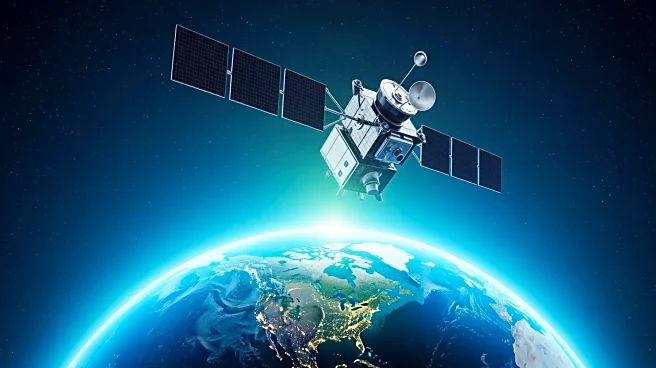
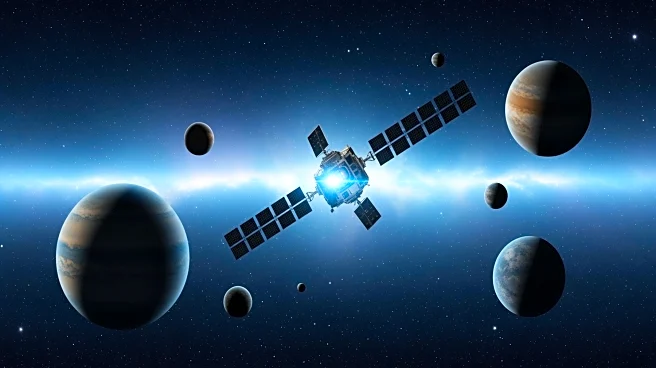
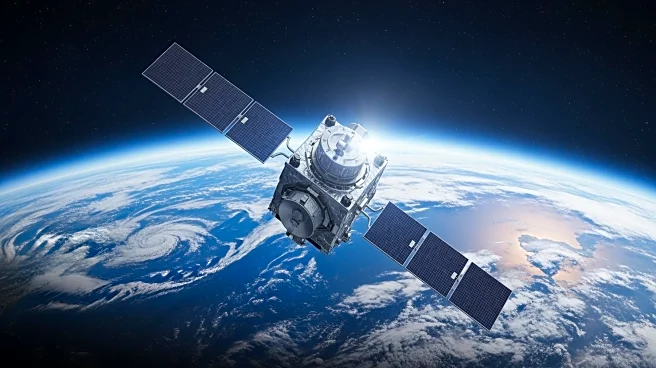
NASA's Pandora satellite is set to explore exoplanets and their host stars by observing planetary transits. During these transits, starlight passes through a planet's atmosphere, interacting with substances like water and oxygen, which absorb specific
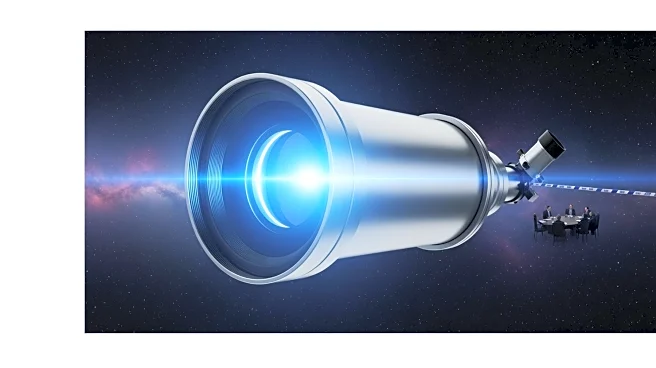
wavelengths and leave chemical fingerprints. However, the challenge lies in distinguishing these signals from the light emitted by the star itself, which can have varying surface features that affect the readings. Pandora aims to address this by conducting detailed studies of at least 20 exoplanets and their stars over its first year. Each target will be observed 10 times, with each session lasting 24 hours. The satellite will utilize a novel 17-inch-wide telescope to collect visible and near-infrared light, helping to refine the understanding of how stellar surface features impact atmospheric measurements.
Why It's Important?
The Pandora mission is significant as it represents a step forward in exoplanetary research, providing more accurate data on planetary atmospheres. This is crucial for identifying potentially habitable planets and understanding the composition of distant worlds. By refining the methods used to detect atmospheric molecules, Pandora could enhance the accuracy of future exoplanet studies. The mission also supports NASA's Astrophysics Pioneers program, which aims to conduct impactful astrophysical research at a lower cost while training new leaders in space science. This initiative could lead to more cost-effective and efficient space missions, broadening the scope of astrophysical exploration.
What's Next?
Pandora's observations will contribute to a better understanding of exoplanetary atmospheres and the challenges posed by stellar surface features. The data collected could inform future missions and the development of new technologies for space exploration. As the first satellite in the Astrophysics Pioneers program, Pandora's success could pave the way for similar low-cost, high-impact missions, potentially expanding the capabilities of space research and exploration. The findings from Pandora could also influence the search for life beyond Earth by providing more precise data on the conditions of distant planets.