







What's Happening?
Researchers at the University of Washington have identified a new species of small, rodent-like mammals from the genus Cimolodon, which survived the mass extinction event that wiped out the dinosaurs 66 million years ago. The newly discovered species,
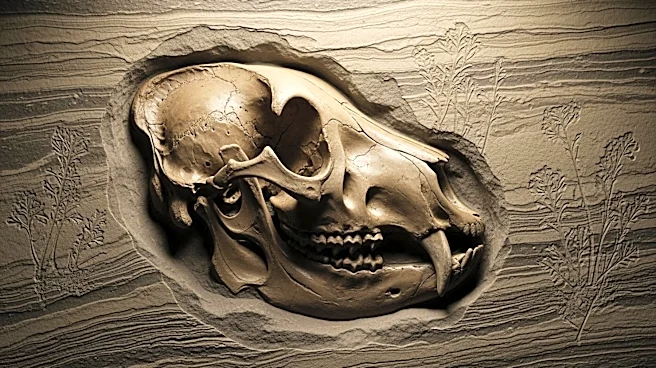
Cimolodon desosai, was found in Baja California and is estimated to be around 75 million years old. This species, roughly the size of a golden hamster, likely moved both on the ground and in trees, with a diet that included fruits and insects. The discovery was made possible by a fossil that included teeth, a skull, jaws, and parts of the skeleton, providing valuable insights into the animal's size and movement. The findings were published in the Journal of Vertebrate Paleontology.
Why It's Important?
The discovery of Cimolodon desosai provides significant insights into how early mammals survived the mass extinction event that eliminated the dinosaurs. Understanding the traits that allowed these mammals to endure such catastrophic events can shed light on the evolutionary processes that led to the diverse forms of mammals seen today. The research highlights the importance of small size and omnivorous diets as advantageous traits for survival during periods of environmental upheaval. This discovery not only enriches the scientific understanding of mammalian evolution but also contributes to the broader knowledge of biodiversity and adaptation in prehistoric times.