






What's Happening?
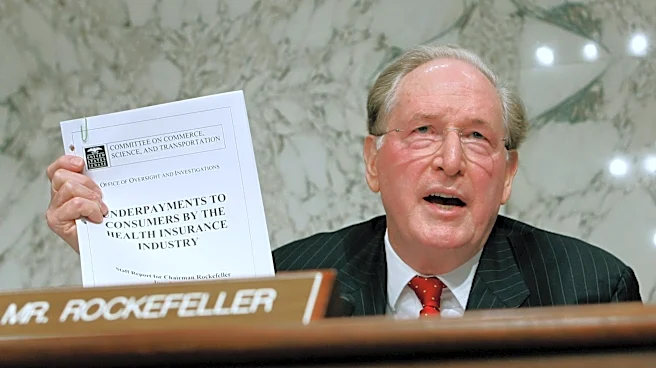
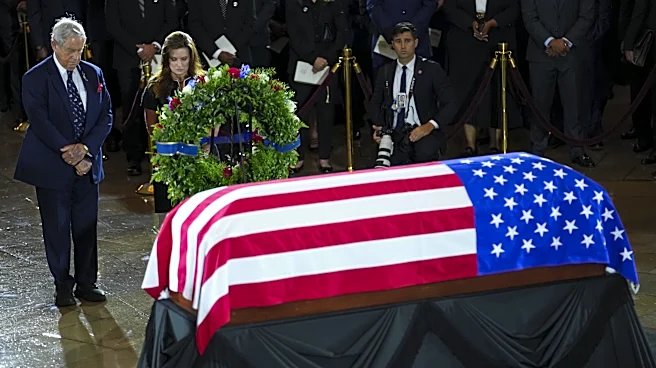
The West Virginia Democratic Party announced the passing of former Governor and United States Senator John D. “Jay” Rockefeller IV at the age of 89. Senator Rockefeller, who died on Friday, is remembered for his extensive public service career dedicated
to improving the lives of West Virginians and Americans. Born into a prominent family, he chose a path of public service, beginning as a VISTA volunteer in West Virginia in 1964. His career included serving in the West Virginia House of Delegates, as Secretary of State, as Governor from 1977 to 1985, and as a U.S. Senator for 30 years, from 1985 until his retirement in 2015. The party highlighted his commitment to the struggles of working families and his efforts to turn compassion into action throughout his political career.
Why It's Important?
Senator Rockefeller's legacy is particularly significant due to his instrumental role in the creation of the Children’s Health Insurance Program (CHIP) in 1997. This program extended health insurance coverage to millions of American children whose families could not otherwise afford it, profoundly impacting public health policy and access to healthcare for vulnerable populations. His advocacy ensured that a child's birthplace or parents' income would not determine their access to medical care. Beyond CHIP, he championed the rights and health benefits of coal miners, fought to protect Medicare and Medicaid, advocated for veterans, and worked to strengthen West Virginia’s economy. His career exemplifies a dedication to using public office to uplift those with the least, setting a precedent for social welfare initiatives in the U.S.
What's Next?
The passing of Senator Rockefeller marks the end of an era for West Virginia politics and national public service. While there are no immediate policy changes or legislative actions directly resulting from his death, his legacy is expected to continue influencing discussions around healthcare access, social welfare programs, and the role of government in supporting working families. Political leaders and civil society groups may draw upon his example in advocating for similar initiatives. The West Virginia Democratic Party, in particular, will likely continue to honor his contributions, using his life's work as an inspiration for future policy endeavors and public discourse on social justice and economic equity.
Beyond the Headlines
Senator Rockefeller's journey from a privileged background to a dedicated public servant in West Virginia offers a profound reflection on civic responsibility and the potential for individuals to transcend their origins for the greater good. His choice to immerse himself in the challenges faced by coal mining communities and his subsequent lifelong commitment to addressing those issues highlight a deep ethical dimension to his public service. This narrative challenges conventional perceptions of wealth and power, suggesting that true influence can be measured by one's impact on the lives of ordinary people. His work on CHIP, in particular, underscores a long-term shift towards recognizing healthcare as a fundamental right, influencing subsequent debates on universal healthcare and social safety nets in the U.S.