


What's Happening?
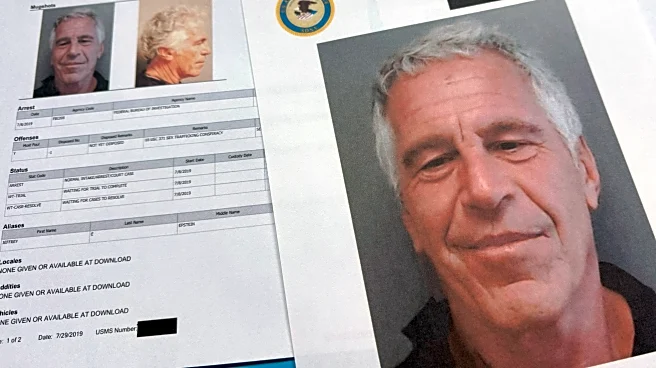
Deputy Attorney General Todd Blanche announced that the Department of Justice (DOJ) has concluded its review of records related to Jeffrey Epstein. In an interview with ABC News, Blanche stated that while some documents remain unreleased due to a protective
order, the review process is complete. The DOJ examined over 6 million documents, thousands of videos, and tens of thousands of images as required by the Epstein Files Transparency Act (EFTA). Despite the extensive review, Blanche noted that the evidence gathered is insufficient to prosecute additional co-conspirators. The release of documents has been criticized by survivors and lawmakers for redaction failures, but Blanche assured that the DOJ is addressing these issues and invited lawmakers to review unredacted materials at DOJ facilities.
Why It's Important?
The conclusion of the DOJ's review is significant as it addresses public and legal demands for transparency regarding Epstein's criminal activities and his network. The Epstein Files Transparency Act aimed to shed light on the extent of Epstein's operations and those involved. However, the criticism from survivors and lawmakers highlights ongoing concerns about the adequacy of the disclosures and the protection of victims' identities. The DOJ's handling of the files could impact public trust in the justice system's ability to hold powerful individuals accountable. Additionally, the lack of new prosecutions may frustrate those seeking justice for Epstein's victims.
What's Next?
Further records related to Epstein and Ghislaine Maxwell's cases are expected to be released, although some materials remain withheld pending court guidance. U.S. Attorney Jay Clayton indicated that the DOJ is consulting with victims and their attorneys to ensure proper handling of sensitive information. Lawmakers, including Representatives Thomas Massie and Ro Khanna, have requested access to unredacted records, suggesting continued scrutiny of the DOJ's actions. The DOJ's commitment to transparency and responsiveness to criticism will be crucial in addressing public and legal concerns moving forward.