



What's Happening?
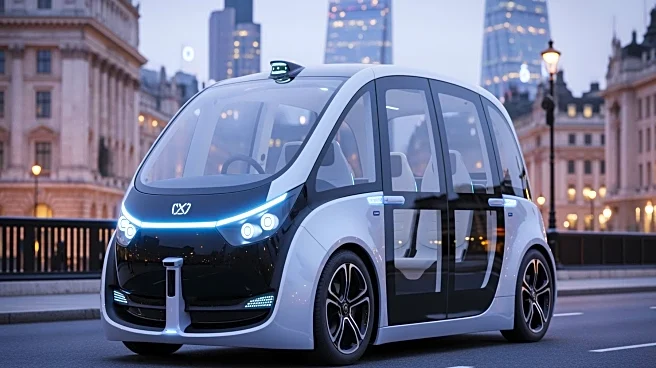
Uber and Lyft have announced plans to introduce robotaxi services in London through partnerships with Chinese tech giant Baidu. The companies aim to participate in a pilot program for self-driving taxis, which the British government plans to initiate
next year. Uber will collaborate with Baidu's Apollo Go autonomous vehicle service, while Lyft will use Baidu's Apollo Go RT6 vehicles. Testing is expected to begin in the first half of 2026, pending regulatory approval. This move positions Britain as a key player in the global rollout of autonomous taxi services.
Why It's Important?
The introduction of robotaxi services in London marks a significant step in the evolution of urban transportation. This initiative could pave the way for widespread adoption of autonomous vehicles, potentially transforming the ride-hailing industry. The collaboration between major U.S. companies and a Chinese tech giant highlights the global nature of technological advancements in transportation. Successful implementation could lead to increased efficiency, reduced traffic congestion, and lower emissions, benefiting urban environments and setting a precedent for other cities worldwide.
What's Next?
As Uber and Lyft prepare to launch their robotaxi services, they will need to navigate regulatory hurdles and ensure the safety and reliability of their autonomous vehicles. The outcome of the pilot program in London could influence future expansions into other markets. Stakeholders, including government regulators, technology developers, and the public, will be closely watching the trials to assess the viability and impact of self-driving taxis. The success of this initiative could accelerate the adoption of autonomous vehicles globally.