





What's Happening?
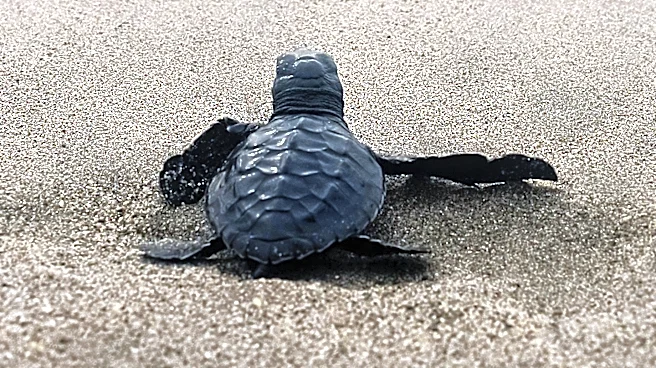
A new study has revealed a record-breaking number of eastern Pacific leatherback turtle nests along Ecuador's beaches during the 2025–2026 nesting season. This discovery, occurring over 1,000 miles from their traditional nesting grounds in Mexico and
Costa Rica, suggests that these turtles may be adapting to warming ocean conditions by seeking cooler nesting sites. Researchers, including Juan José Alava from Simon Fraser University, found increased nesting activity in Ecuador during cold episodes, or La Niña events, in the southeastern tropical Pacific Ocean over the last decade. The study, published in the journal Chelonian Conservation and Biology, reviewed over 45 years of data on turtle sightings, nesting success, and strandings, correlating this activity with El Niño and La Niña cycles. Notably, the nest yield and hatch rates in Ecuador were comparable to, and in some cases exceeded, those in traditional nesting areas.
Why It's Important?
This finding offers a glimmer of hope for the eastern Pacific leatherback turtle, a subspecies facing extinction within 60 years due to a more than 90 percent population decline since the 1980s. The ability of these turtles to adapt their reproductive cycle and find new nesting grounds in response to climate-driven changes in ocean temperatures is crucial for their survival. It highlights the resilience of some species in the face of environmental shifts, providing valuable insights for conservation strategies. For marine conservation efforts globally, this adaptation suggests that understanding and protecting these newly utilized habitats, particularly during La Niña events, could be vital. It also underscores the complex interplay between climate patterns like La Niña and the ecological responses of marine life.
What's Next?
Ongoing monitoring and concerted conservation efforts are crucial for the long-term survival of the eastern Pacific leatherback. This includes bycatch mitigation, effective coastal zone management to protect Ecuador's nesting beaches, and close consultation with local communities. Researchers will likely continue to study the correlation between La Niña events and nesting patterns to better predict and protect these new habitats. The findings may also inform broader climate change adaptation strategies for other vulnerable marine species. The success of individual turtles, like 'Bella' who nested multiple times and produced a high number of hatchlings, provides valuable data for understanding reproductive success in these new environments.
Beyond the Headlines
The discovery of these new nesting sites in Ecuador, driven by La Niña conditions, points to a broader ecological phenomenon: species adapting to climate change by shifting their geographical ranges. While this adaptation offers hope, it also presents new challenges for conservation, as traditional protection zones may become less relevant, and new areas require immediate attention and resources. The study implicitly calls for a dynamic approach to conservation, one that can respond to the fluid nature of climate impacts. It also highlights the importance of long-term ecological research in understanding complex environmental changes and informing effective, adaptive conservation policies, especially for highly migratory species like the leatherback turtle.