






What's Happening?
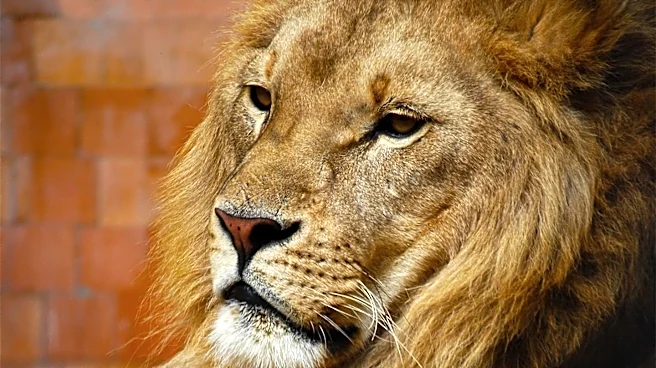
Potter Park Zoo in Lansing, Michigan, has announced the death of Kota, a 19-year-old lion who had been suffering from severe spinal disease. Kota had been showing signs of declining health, including a decrease in appetite and mobility, prompting veterinarians
to conduct a CT scan and an upper gastrointestinal endoscopic examination at the Michigan State University Veterinary Medical Center. These tests confirmed the presence of severe spinal disease, a condition common in older large cats. Due to Kota's advanced age and the severity of his condition, surgery was not considered viable. Instead, the zoo's veterinary and animal care teams focused on maintaining his comfort and quality of life. When Kota ceased responding to treatments, the decision was made to humanely euthanize him. Kota had been a resident of Potter Park Zoo for over 18 years, becoming a familiar presence to both staff and visitors.
Why It's Important?
Kota's death highlights the challenges zoos face in caring for aging animals, particularly those with complex health issues. The decision to euthanize Kota underscores the ethical considerations involved in animal care, balancing quality of life against medical intervention. This event also draws attention to the broader issue of geriatric care in zoos, as many facilities house animals that live beyond their natural life expectancy due to improved care. The zoo's plan to renovate its big cat exhibits by 2027, with no new big cats being introduced until 2028, reflects a commitment to improving living conditions for future residents. This renovation could set a precedent for other zoos in terms of exhibit design and animal welfare standards.
What's Next?
Potter Park Zoo is planning significant renovations to its big cat exhibits, scheduled to begin in 2027. These renovations aim to enhance the living conditions for future big cats, although no new big cats will be introduced until the renovations are completed in 2028. This period of transition provides an opportunity for the zoo to reassess and potentially innovate in terms of exhibit design and animal care practices. The zoo's approach may influence other institutions in the Association of Zoos and Aquariums network, potentially leading to broader changes in how aging animals are cared for and how exhibits are designed to meet their needs.