



What's Happening?
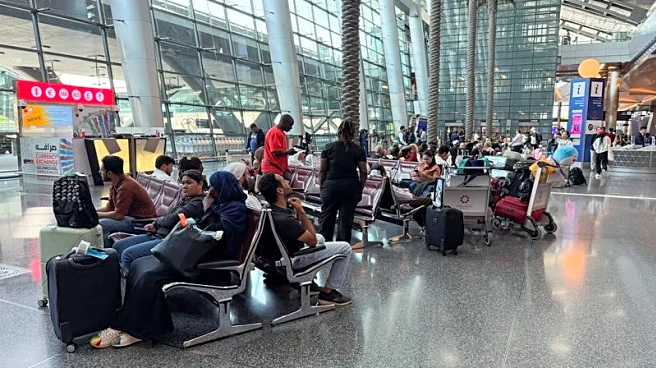
Airstrikes in Iran have led to the closure of airspace across several Middle Eastern countries, causing widespread flight cancellations and leaving passengers stranded. Major airlines, including Cathay Pacific, have suspended flights to and from key hubs
like Dubai and Doha. The closures have affected airspaces in Israel, Lebanon, Jordan, Iraq, Qatar, and Iran, with additional suspensions by Lufthansa Group airlines to destinations such as Dubai, Abu Dhabi, Riyadh, and Dammam. The disruption has extended to airports worldwide, including Tribhuvan International Airport in Nepal and London Gatwick Airport, where passengers have been advised to check their flight status due to potential delays and cancellations.
Why It's Important?
The closure of Middle Eastern airspace has significant implications for global air travel, as the region's airports serve as major transit hubs. Airlines like Emirates, Qatar Airways, and Etihad Airways, which collectively handle around 90,000 transit passengers daily, are heavily impacted. The disruption affects not only passengers traveling to the Middle East but also those connecting through these hubs to other destinations. The situation has led to logistical challenges for airlines and airports, with passengers facing long wait times and uncertainty about their travel plans. The economic impact on airlines and related industries could be substantial if the airspace remains closed for an extended period.
What's Next?
Airlines and passengers are awaiting updates on when the affected airspaces might reopen. In the meantime, airlines are working to accommodate stranded passengers, offering hotel vouchers and alternative travel arrangements where possible. The situation remains fluid, with potential for further disruptions if geopolitical tensions escalate. Airlines are likely to continue advising passengers to monitor their flight status and prepare for possible delays. The aviation industry will need to assess the long-term impact of these closures on flight schedules and passenger confidence.