

What's Happening?
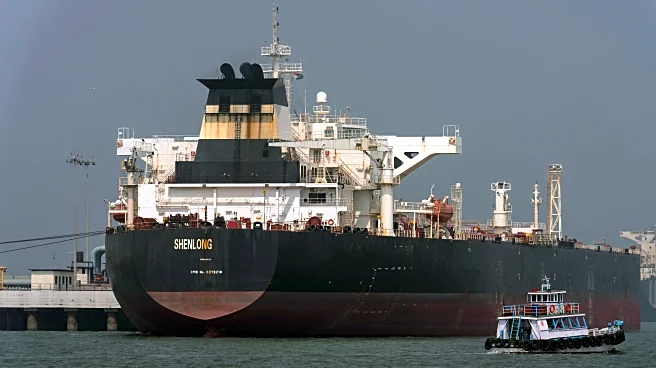
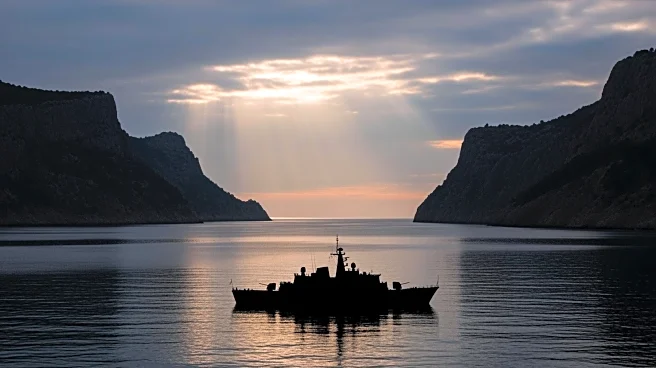
European leaders have declined President Trump's request for naval support to reopen the Strait of Hormuz, a critical channel for global oil and gas transport, which has been blocked by Iran. Despite Trump's warnings about the future of NATO if members
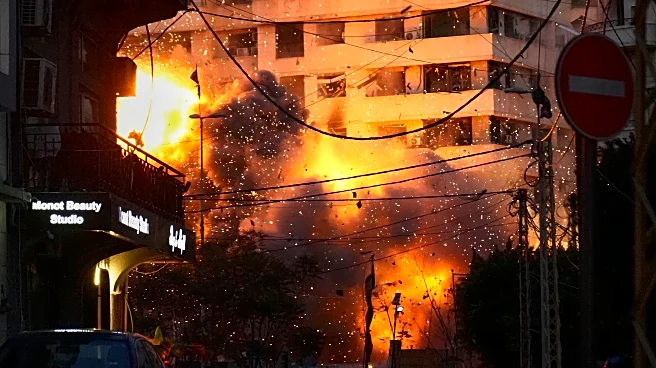
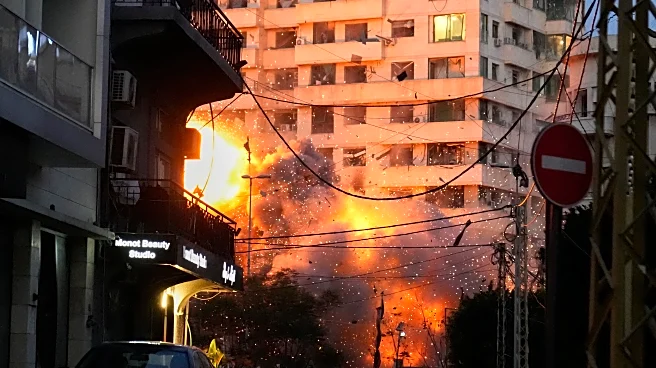
do not assist, countries like Germany, Italy, and France have opted for diplomatic solutions rather than military involvement. The UK has also stated it will not be drawn into the broader conflict. This decision comes amid heightened tensions following Israeli airstrikes that reportedly killed senior Iranian figures, including Iran's national security chief, Ali Larijani. The situation has led to increased oil prices, with Brent crude reaching $103.2 a barrel.
Why It's Important?
The refusal of European nations to provide military support highlights a significant divergence in transatlantic relations, particularly concerning Middle Eastern policy. This decision underscores Europe's preference for diplomatic engagement over military intervention, potentially straining NATO alliances. The blockage of the Strait of Hormuz, through which a significant portion of the world's oil and gas is transported, poses a risk to global energy markets, potentially leading to increased prices and economic instability. The situation also reflects broader geopolitical tensions, with European leaders wary of escalating conflicts that could have widespread repercussions.
What's Next?
The ongoing conflict and Europe's stance may lead to further diplomatic efforts to resolve the blockade of the Strait of Hormuz. The international community will likely continue to monitor the situation closely, with potential implications for global energy markets and regional stability. European leaders may seek to mediate between the U.S., Israel, and Iran to prevent further escalation. The response from Iran and other regional actors will be crucial in determining the next steps in this complex geopolitical landscape.