









What's Happening?
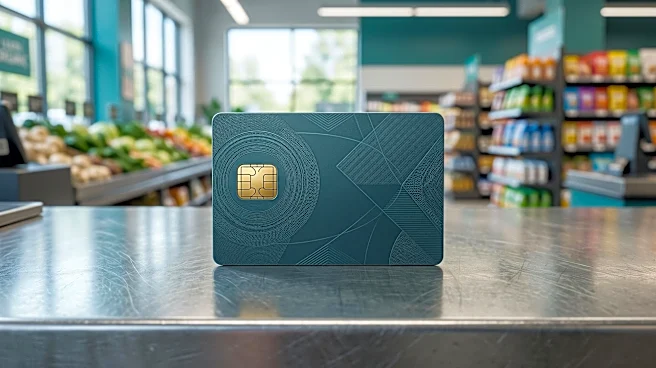
The U.S. Department of Agriculture (USDA) has released a proposed rule mandating that state Supplemental Nutrition Assistance Program (SNAP) agencies upgrade Electronic Benefit Transfer (EBT) cards to incorporate chip and Near-Field Communication (NFC)
technology. This initiative aims to significantly reduce benefit theft caused by card skimming and cloning, which has been a persistent issue. The USDA's Office of Inspector General reported that the lack of security features in EBT cards led to $322 million in replaced benefits due to fraudulent activity between October 2022 and December 2024. Without these upgrades, an additional $233 million in fraudulent activity is projected for fiscal years 2025 and 2026. The proposed rule also requires SNAP retailers to accept transactions using these enhanced technologies, aligning EBT cards with modern credit and debit card security standards. The public comment period for this rule is open until December 22.
Why It's Important?
This proposed rule is crucial for protecting vulnerable SNAP beneficiaries from financial fraud and ensuring the integrity of a vital federal assistance program. The current lack of advanced security features in EBT cards has made them easy targets for criminals, leading to substantial financial losses for both individuals and the government. By adopting chip and NFC technology, the USDA expects to mitigate skimming and cloning attacks, thereby safeguarding benefits for low-income families. The move also standardizes EBT card technology with the broader consumer payment industry, potentially improving user experience and reducing the stigma associated with using EBT cards. However, the implementation poses significant challenges, particularly regarding funding for states to upgrade their systems and the potential impact on cardholders, especially those experiencing homelessness, who may face difficulties activating new cards.
What's Next?
The proposed rule is currently open for public comment until December 22. Following this period, the USDA will review feedback before finalizing the regulations. Once finalized, state SNAP agencies will be required to upgrade their EBT cards and systems to comply with the new security standards. The USDA estimates a one-time cost of $283 million in fiscal years 2028 and 2029 for state agencies, the federal government, households, and businesses to support these changes. Questions remain about how these costs will be distributed, with organizations like the Aspen Institute urging Congress to provide dedicated funding to states to facilitate these upgrades, as many states may struggle to bear the financial burden alone. Eight states have already begun issuing chip-enabled EBT cards, with others, including New York and Pennsylvania, planning to do so next year.
Beyond the Headlines
The transition to chip and NFC technology for EBT cards highlights a broader issue of digital equity and the challenges of modernizing public assistance programs. While the security benefits are clear, the implementation process could inadvertently create barriers for some of the most vulnerable populations. For instance, requiring households to activate new chip cards upon receipt could disproportionately affect individuals experiencing homelessness or those with limited access to technology. This situation underscores the need for comprehensive support systems and clear communication strategies during the rollout. Furthermore, the ongoing need to adapt to evolving payment technology suggests that continuous investment and flexible regulatory frameworks will be essential to keep pace with sophisticated fraud schemes, ensuring that public benefits remain secure and accessible in an increasingly digital world.