







What's Happening?
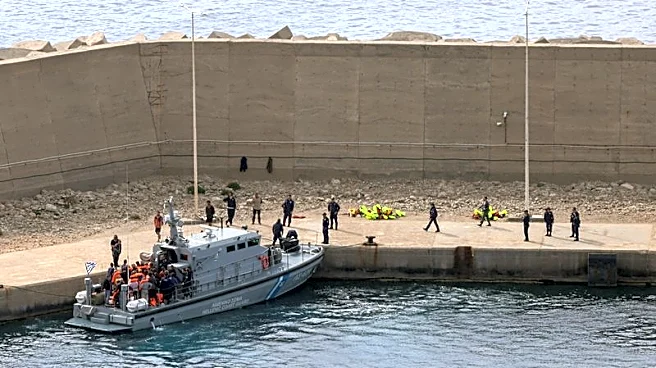
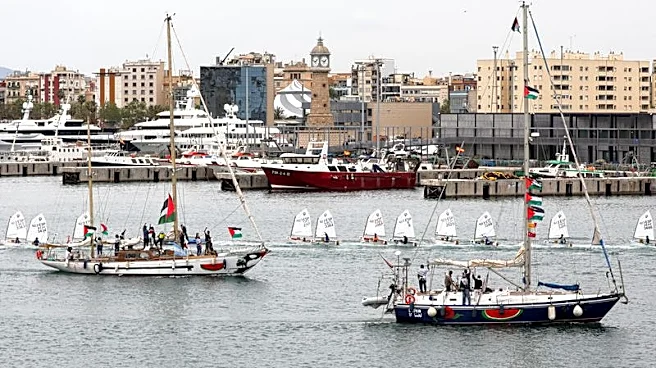
Israeli authorities have detained two activists, Saif Abukeshek and Thiago Ávila, who were leading a flotilla aimed at breaking the naval blockade on Gaza. The flotilla, consisting of 20 boats and 175 activists, was intercepted by the Israeli navy in international
waters off the coast of Crete. The activists were part of the Global Sumud Flotilla, which sought to deliver humanitarian aid to Gaza. Israeli officials justified the interception by citing the large number of boats involved. The Israeli Foreign Ministry stated that Abukeshek is suspected of terrorist affiliations, while Ávila is suspected of illegal activities. The flotilla's organizers have called for international support, condemning the interception as a violation of international law.
Why It's Important?
The interception of the flotilla and the detention of its leaders highlight ongoing tensions surrounding the Israeli blockade of Gaza. This incident underscores the international community's divided stance on the blockade, with some nations and organizations viewing it as a humanitarian issue. The flotilla's attempt to reach Gaza reflects persistent efforts by activists to challenge the blockade, which they argue exacerbates the humanitarian crisis in the region. The situation also raises questions about the legality of intercepting vessels in international waters and the broader implications for international maritime law.
What's Next?
The detained activists are expected to face questioning in Israel, and their fate could influence future actions by similar activist groups. The international response, particularly from Spain and Brazil, whose citizens were detained, may affect diplomatic relations with Israel. Additionally, the incident could prompt further scrutiny of Israel's blockade policies and lead to increased activism aimed at challenging the blockade.
Beyond the Headlines
The interception of the flotilla may have broader implications for international maritime law and the rights of activists to challenge blockades. It also highlights the complex geopolitical dynamics in the region, where humanitarian concerns often intersect with security issues. The incident could lead to increased calls for a reevaluation of the blockade's impact on Gaza's civilian population.