






What's Happening?
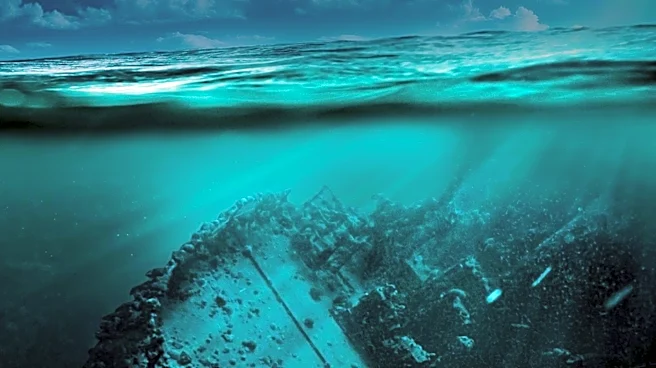
The UK Government has commissioned a project to remove the masts from the SS Richard Montgomery, a World War II American Liberty shipwreck located in the Thames Estuary. The project, costing approximately $12.7 million, aims to dismantle the masts of
the ship, which still contains around 1,400 tons of explosives. The SS Richard Montgomery, one of over 2,700 Liberty ships built during WWII, was grounded in 1944 while carrying nearly 7,000 tons of munitions. Although a salvage operation recovered about half of the munitions, the ship broke apart, leaving the remaining explosives submerged. The masts, which are the only visible parts of the wreck, have become a local landmark but pose a risk of displacing or detonating the explosives. The removal operation, led by Resolve Marine, is set to begin in July and conclude by September, weather permitting.
Why It's Important?
The removal of the masts from the SS Richard Montgomery is crucial for public safety and environmental protection. The presence of a large quantity of explosives in a deteriorating shipwreck poses a significant risk to the surrounding area, including potential explosions that could harm local communities and disrupt marine ecosystems. The project reflects the ongoing responsibility of governments to manage and mitigate the risks associated with historical wartime remnants. Additionally, the operation underscores the importance of preserving historical artifacts, as the masts will be displayed locally to educate the public about the Allied war effort. This initiative highlights the balance between safety, historical preservation, and community engagement.
What's Next?
Following the removal of the masts, the UK Government plans to display them at The Historic Dockyard Chatham, providing a tangible connection to the past for local communities. The project is expected to be completed by the end of September, although adverse weather conditions could cause delays. The successful completion of this project may set a precedent for handling similar wartime wrecks in the future, emphasizing the need for careful planning and execution to prevent environmental and safety hazards. Ongoing monitoring of the wreck site will likely continue to ensure that any remaining risks are managed effectively.