





What's Happening?
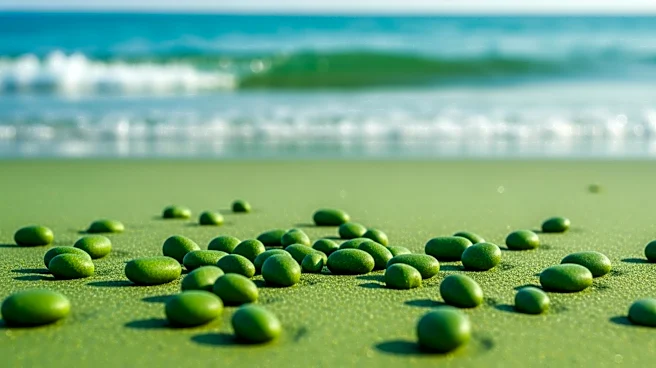
A pilot project in New York state has tested the use of crushed olivine sand to remove atmospheric CO2 by adding it to the ocean. The trial found no adverse effects on the seafloor ecosystem in its first year. Conducted by the non-profit group Hourglass
Climate, the study involved depositing 650 tonnes of olivine sand along a beach in Long Island. The results showed that the abundance and diversity of bottom-dwelling species recovered within two months, and metal concentrations in organisms remained low. This method of carbon removal is being explored as a potential solution to help achieve net-zero greenhouse gas emissions.
Why It's Important?
As global emissions continue to rise, innovative carbon removal techniques are crucial for mitigating climate change. The use of olivine sand in the ocean could provide a scalable and effective method for sequestering CO2. This approach offers a potential solution for reducing atmospheric carbon levels and helping to meet international climate goals. The study's findings are promising, suggesting that this method could be implemented without significant harm to marine ecosystems.
What's Next?
Hourglass Climate is monitoring a larger trial off the coast of North Carolina, where 8,200 tonnes of olivine have been deposited. Further research will focus on understanding the long-term impacts of olivine addition on marine life and the effectiveness of CO2 sequestration. Continued trials and studies will be essential to determine the viability of this method as a large-scale carbon removal strategy.