



What's Happening?
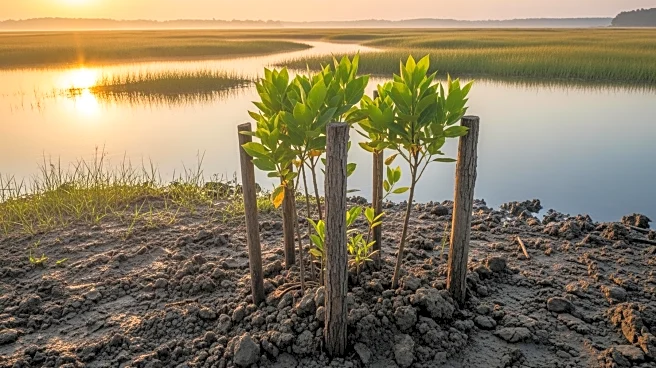
In an effort to protect New Orleans from worsening storms and rising sea levels, environmental groups in Louisiana are undertaking a large-scale tree planting initiative. The project aims to plant 30,000 trees, including bald cypress and water tupelo,
to restore the natural wetland barriers that were lost after Hurricane Katrina in 2005. This initiative is part of a broader movement to rebuild the region's ecosystem, which has been severely degraded by past engineering decisions such as the construction of the Mississippi River-Gulf Outlet Canal (MRGO). The canal, which was closed in 2009, allowed saltwater to intrude into freshwater ecosystems, damaging the natural defenses against hurricanes. The restoration project is a collaborative effort involving several organizations, including the Coalition to Restore Coastal Louisiana and the Meraux Foundation, and is supported by federal and state funding.
Why It's Important?
The restoration of Louisiana's wetlands is crucial for the protection of New Orleans and surrounding areas from future hurricanes and flooding. The wetlands act as a natural buffer, absorbing storm surges and reducing the impact of hurricanes. By replanting trees, the project aims to stabilize the soil and create habitats for wildlife, contributing to the overall resilience of the region. This initiative not only addresses environmental concerns but also serves as a form of community healing and resilience building, as it involves local volunteers and educates the next generation about the importance of environmental stewardship. The success of this project could serve as a model for other coastal regions facing similar challenges due to climate change and human intervention.
What's Next?
The organizations involved in the tree planting project are on track to meet their goal of planting 30,000 trees by next year. As the trees mature, they are expected to provide increased protection against storms and contribute to the restoration of the region's natural ecosystem. Continued monitoring and maintenance will be necessary to ensure the success of the project. Additionally, the initiative may inspire further environmental restoration efforts in other vulnerable coastal areas. The involvement of local communities and volunteers will remain a key component, fostering a sense of ownership and responsibility for the region's environmental future.
Beyond the Headlines
The tree planting initiative in Louisiana highlights the complex interplay between human activity and natural ecosystems. The historical context of engineering decisions, such as the construction of levees and canals, underscores the long-term consequences of altering natural landscapes. This project serves as a reminder of the importance of sustainable development and the need to balance human needs with environmental preservation. It also raises questions about the role of government and private organizations in addressing the impacts of climate change and supporting community-led restoration efforts.