




What's Happening?
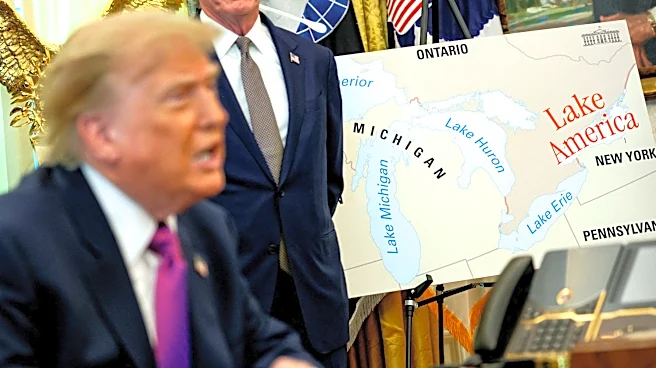
House Speaker Mike Johnson has commented on President Trump’s escalating trade dispute with Canada. Johnson indicated that a new trade agreement with Ottawa remains a possibility, despite ongoing tariff-related tensions that are straining relations between
the two long-standing allies. The statement comes amidst a period where trade policies and tariffs have been a significant point of contention in U.S.-Canada relations. The discussion around a 'new Canada deal' suggests an ongoing effort to resolve these trade disagreements, which have seen various tariffs imposed and retaliatory measures taken by both nations. The focus is on finding a resolution that could potentially alleviate the economic pressures caused by the current trade environment.
Why It's Important?
This development is important for several reasons, primarily impacting U.S. industries and economic stakeholders. The trade confrontation with Canada, a major trading partner, has implications for various sectors, including agriculture, manufacturing, and automotive industries. Tariffs can increase costs for consumers and businesses, disrupt supply chains, and reduce competitiveness. A new trade deal could stabilize these sectors, providing predictability and potentially boosting economic activity. Conversely, continued tensions could lead to further economic uncertainty and job losses in industries heavily reliant on cross-border trade. For U.S. consumers, tariffs often translate to higher prices for imported goods. The political ramifications are also significant, as trade disputes can influence diplomatic relations and future policy decisions, affecting the broader North American economic landscape.
What's Next?
The immediate next steps will likely involve continued negotiations and discussions between U.S. and Canadian officials. House Speaker Johnson's remarks suggest that the U.S. administration is open to a new agreement, which could lead to formal talks aimed at resolving the tariff issues. Stakeholders, including industry leaders and trade associations, will be closely monitoring these developments, potentially lobbying for outcomes favorable to their sectors. The political climate in both countries will also play a role, as any new deal would require legislative approval and public support. The potential for further retaliatory tariffs remains if a resolution is not reached, which could escalate the trade dispute and further impact economic stability. The focus will be on finding common ground to alleviate current trade tensions.
Beyond the Headlines
Beyond the immediate trade implications, this situation highlights the evolving nature of international trade agreements and the role of tariffs as a tool in foreign policy. The U.S.-Canada trade relationship is deeply intertwined, and disruptions can have ripple effects across both economies. This ongoing dispute also underscores the broader shift in global trade dynamics, where traditional alliances are being re-evaluated and economic nationalism is gaining prominence. The ethical dimension involves the impact on workers and communities whose livelihoods depend on stable cross-border trade. The long-term shift could be towards more protectionist trade policies, potentially leading to a re-evaluation of global supply chains and a greater emphasis on domestic production, which could have lasting effects on the global economy and international relations.