



What's Happening?
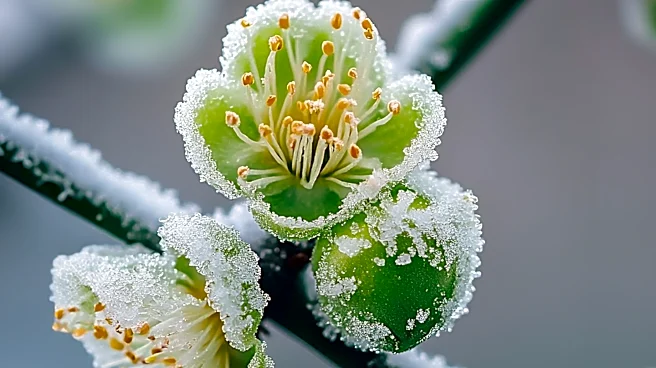
A severe late-April frost has caused a significant shortage of pawpaw fruit in the region, impacting local farmers markets and chefs. The frost decimated many of the pawpaw tree buds, which are essential for fruit production. Chef Alex Bilaro, known for his
pawpaw-infused gelato and sorbets, had to travel to Lancaster, Pennsylvania, and scour online marketplaces to find the fruit. Farmers markets, including those in Takoma Park and Silver Spring, experienced a drastic reduction in pawpaw availability, with some vendors unable to attend. The U.S. Department of Agriculture approved a disaster declaration for Maryland farms in June due to the frost's widespread impact on various stone fruits and grape crops, allowing farmers to apply for emergency loans.
Why It's Important?
This pawpaw shortage highlights the vulnerability of local food systems to extreme weather events and their significant economic impact on regional farmers and small businesses. The frost not only affected pawpaws but also stone fruits like apricots, cherries, nectarines, peaches, plums, and apples, leading to substantial financial losses for farmers. The reliance of local chefs and businesses on seasonal, native produce means that such environmental disruptions can force them to alter menus, seek alternative suppliers, or face reduced sales. The USDA's disaster declaration underscores the severity of the situation, providing a crucial safety net for affected farms and emphasizing the need for resilience in agricultural practices.
What's Next?
While the current pawpaw season is ending with a significant shortage, experts predict a potential abundance of the fruit next year. Horticulturists suggest that trees, having conserved energy this year due to reduced fruit production, may overproduce in the following season. Farmers and market operators are adapting by selling other produce or allowing non-local items to supplement their offerings to maintain revenue. The long-term implications for regional fruit farmers, including winemakers, will continue to be assessed, with ongoing efforts to mitigate future weather-related crop losses. Farmers will likely explore strategies to enhance crop resilience and diversify their offerings to reduce dependence on single crops.
Beyond the Headlines
The pawpaw shortage underscores broader issues of climate change and its localized impacts on agriculture. The increasing frequency of unpredictable weather events, such as late frosts, poses a significant threat to biodiversity and the economic stability of agricultural communities. This situation also brings to light the cultural significance of native fruits like the pawpaw and the efforts of chefs and enthusiasts to preserve and popularize them. The challenges faced by farmers highlight the delicate balance between nature and cultivation, prompting discussions on sustainable farming practices, crop diversification, and the development of more resilient agricultural systems to ensure food security and support local economies in the face of environmental shifts.